


That Sharp, Burning Knot Isn’t Random… It’s a Warning Sign
You’re sitting at your desk. Or driving. Or even just relaxing on the couch.
Then it hits.
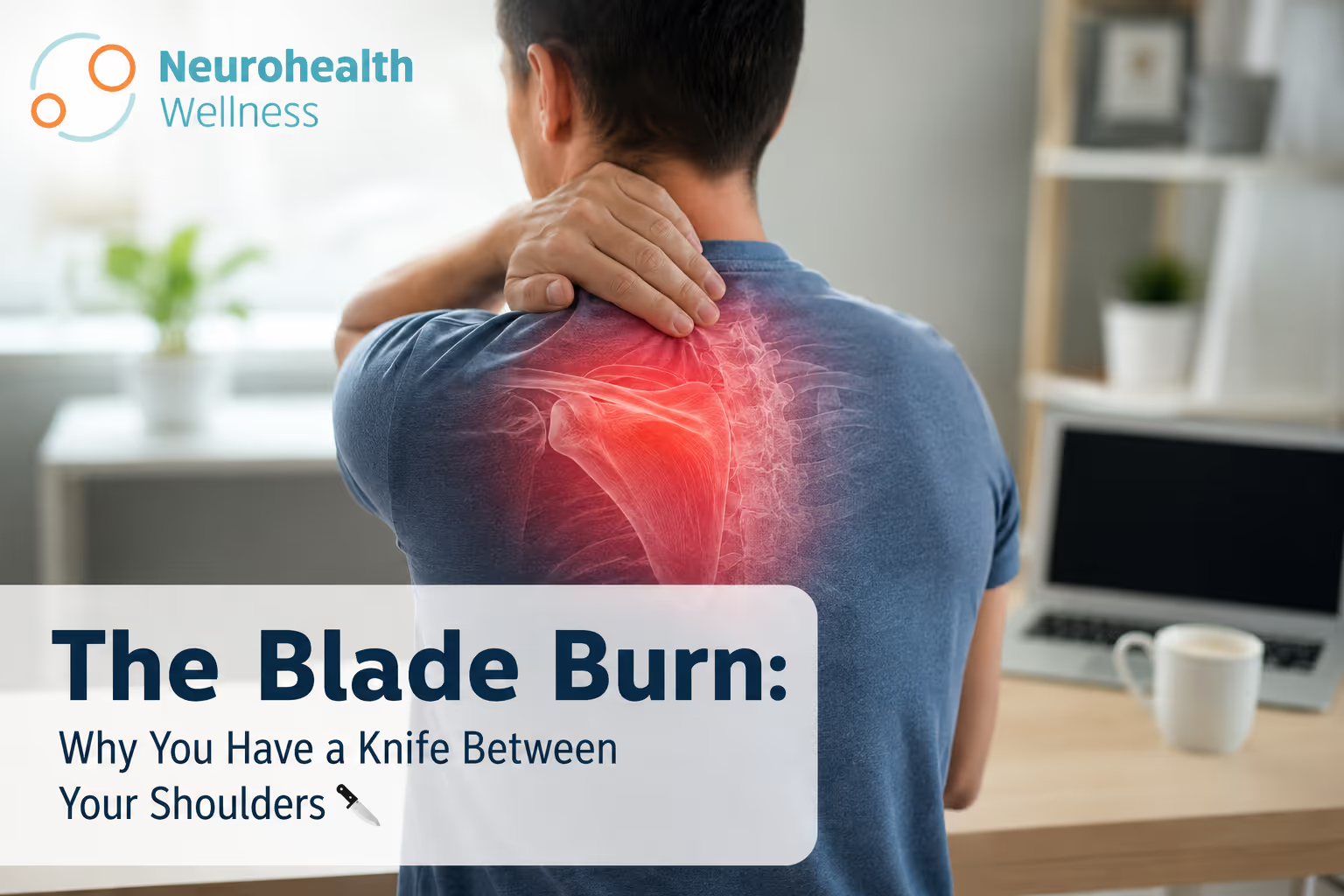
A deep, burning, stabbing pain between your shoulder blade and your spine. It feels like someone has wedged a hot knife into your upper back—and no matter how much you stretch, twist, or dig into it, it just won’t release.
At Neurohealth Wellness, we see this every week across the Northern Beaches. And here’s the truth:
👉 That “knot” isn’t the problem. It’s the symptom of a system under load.
The Anatomy: Your Shoulder Blade’s Support System
The muscle at the centre of this pain is the rhomboid.
Think of it as a biological bridge connecting your spine to your shoulder blade.
Its job is simple but critical:
- Keep your shoulder blade anchored to your spine
- Stabilise your upper back
- Support efficient movement of your arms and shoulders
When this system works well, your posture feels effortless.
When it doesn’t… everything starts to overload.
The Real Problem: Your Arms Are Winning the Tug-of-War
Here’s what most people don’t realise:
Your arms are heavy.
And when you:
- Sit at a desk
- Use a keyboard
- Drive for long periods
- Look down at your phone
Your arms fall forward.
Because your arms attach to your shoulder blades, they drag your shoulder blades forward with them.
This creates:
- Rounded shoulders
- A stretched upper back
- Constant tension through the rhomboids
👉 Your rhomboids are now working overtime—like a rope being pulled tight all day long.
Why That “Knot” Feels So Intense
After hours of this constant load, your rhomboid doesn’t just get “tight.”
It fails under fatigue.
To protect itself, your body triggers a defensive spasm:
- Blood flow decreases
- Oxygen drops
- Waste products build up
- Pain signals ramp up
That burning, rock-hard knot?
👉 It’s your body saying:
“If I don’t lock this down, something is going to tear.”
Why Massage Alone Doesn’t Fix It
Rolling on a ball or getting someone to dig into it might feel good temporarily.
But here’s the issue:
- You’re pressing into an already overstretched, exhausted muscle
- You’re not addressing the forward pull causing the problem
- The tension returns… often within minutes
👉 This is why so many people feel stuck in a cycle of relief → relapse.
The Bigger Picture: It’s Not Just a Muscle Problem
At Neurohealth Wellness, we don’t just look at muscles—we look at the nervous system and movement patterns driving them.
That rhomboid spasm is often linked to:
- Thoracic spine stiffness
- Neck dysfunction
- Poor scapular control
- Breathing mechanics (yes, even this matters)
Your body isn’t breaking down randomly.
It’s adapting to the loads you place on it every day.
How to Break the Cycle (Properly)
1. Open the Front of Your Body
Your chest muscles (pectorals) are often the real culprits.
Simple fix:
- Stand in a doorway
- Place forearms on the frame
- Gently lean forward
- Hold for 30–60 seconds
👉 This reduces the forward pull on your shoulders.
2. Rebuild Scapular Control
Your rhomboids don’t just need rest—they need support from surrounding muscles.
Try this:
- Sit or stand tall
- Gently squeeze shoulder blades together
- Hold for 5–10 seconds
- Repeat 8–10 times
👉 Think control, not force.
3. Change the Load (This Is the Game-Changer)
If you go back to:
- Slouched sitting
- Forward head posture
- Long hours without movement
👉 The pain will come straight back.
Instead:
- Take movement breaks every 30–60 minutes
- Adjust screen height to eye level
- Keep shoulders relaxed, not rounded
Chiropractic Insight: Why Adjustments Matter
This is where chiropractic care plays a key role.
At Neurohealth Wellness, our chiropractors (Steve, Florian, and Vivian) look at:
- Joint mobility through the thoracic spine
- Rib and scapular mechanics
- Nervous system regulation
When these areas are restricted:
👉 Your muscles are forced to compensate and overwork.
Restoring movement helps:
- Reduce muscle overload
- Improve posture naturally
- Allow the body to rebalance itself
👉 Sick of that burning knot coming back?
Book your New Patient Chiropractic Assessment and uncover the real cause:
🔗 https://www.neurohealthwellness.com.au/booking
📞 (02) 9905 9099
Prevention > Temporary Relief
At Neurohealth, we always come back to one principle:
👉 Don’t chase symptoms. Change the system.
The goal isn’t to:
- Crack the knot
- Stretch endlessly
- Mask the pain
The goal is to:
- Reduce mechanical stress
- Improve movement
- Build resilience
When to Get It Checked
If your upper back pain:
- Keeps returning
- Feels sharp, burning, or deep
- Spreads into your neck or shoulder
- Limits your movement or sleep
👉 It’s time to assess the whole system, not just the sore spot.
👉 Ready to get rid of the “knife in your back” for good?
Our team at Neurohealth Wellness in Allambie Heights is here to help you move better, feel stronger, and live pain-free.
🔗 Book online: https://www.neurohealthwellness.com.au/booking
📞 Call: (02) 9905 9099


