


Dry Needling in Allambie Heights: Target the Muscle Pain That Keeps Coming Back
If you’ve tried stretching, massage, rest, or even “just pushing through” — yet the pain keeps returning — the problem may not be weakness or damage.
It’s often a nervous system–driven muscle lock-up.
At Neurohealth Wellness in Allambie Heights, dry needling is used to help reset dysfunctional muscle tone, reduce ongoing pain signals, and restore smoother, more efficient movement — especially when pain has become chronic or recurrent.
This isn’t about chasing symptoms.
It’s about restoring normal communication between your muscles, joints, and nervous system.
What Is Dry Needling?
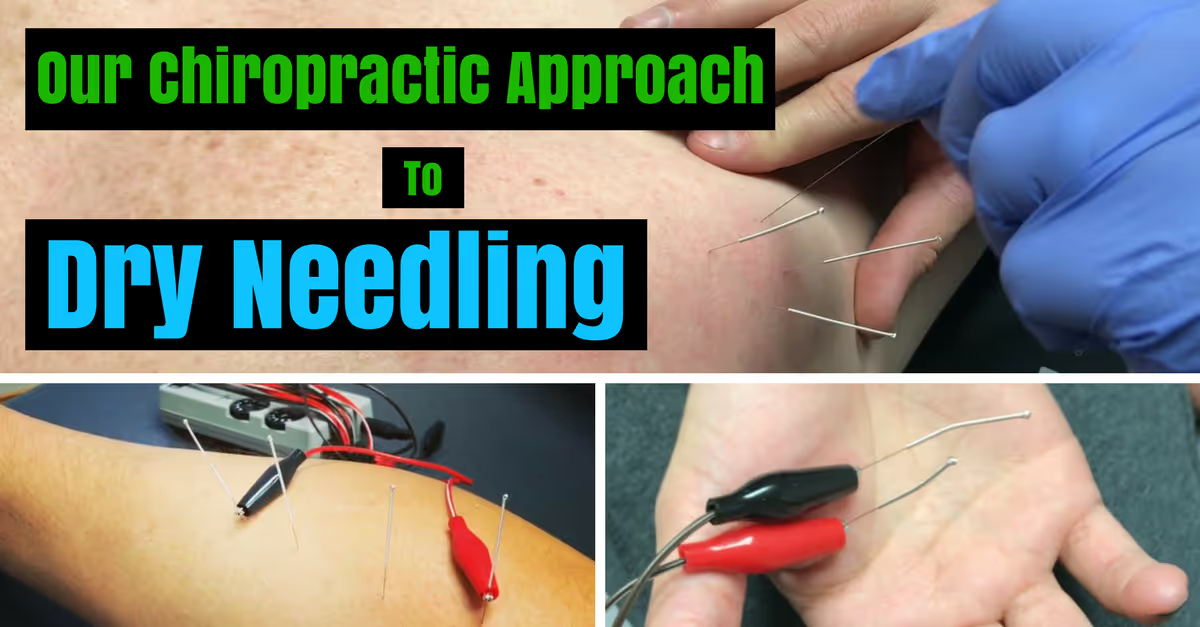
Dry needling is a clinically applied technique that uses very fine, sterile needles to target myofascial trigger points — areas of muscle that have become neurologically overactive and mechanically stiff.
These trigger points can:
- Refer pain elsewhere in the body
- Restrict joint movement
- Alter posture and movement patterns
- Keep pain circuits switched “on” long after tissue healing should have occurred
Unlike acupuncture, dry needling is based on Western anatomy, neurophysiology, and biomechanics, focusing on how muscles and nerves interact to control movement.
At Neurohealth Wellness, dry needling is never a standalone treatment — it’s integrated into a whole-body assessment and movement-based care plan.
Why Muscles Get “Stuck” in the First Place
Muscle tightness isn’t always about flexibility.
Often, it’s a protective neurological response.
Pain, stress, injury, repetitive strain, or poor movement habits can cause the nervous system to increase resting muscle tone. Over time, this creates trigger points — hyper-sensitive zones that:
- Reduce blood flow
- Accumulate metabolic waste
- Sensitise local and central pain pathways
This is why stretching alone often provides temporary relief, but not resolution.
Dry needling works by interrupting this loop.
How Dry Needling Works (The Science Bit — Simply Explained)
When a needle is inserted into a trigger point, it often produces a local twitch response — a brief involuntary muscle contraction.
This response is important because it:
- Normalises muscle spindle activity
- Reduces abnormal electrical activity in the muscle
- Improves local circulation
- Decreases pain-producing chemicals
- Helps “re-map” how the brain controls that muscle
In simple terms:
The muscle gets permission to relax again.
When combined with movement retraining and joint care, this change is far more likely to hold.
Conditions Commonly Helped by Dry Needling
Dry needling can be particularly effective for:
- Chronic neck and shoulder pain
- Headaches and migraines linked to muscular tension
- Lower back pain and stiffness
- Sciatica and referred leg pain
- Hip and pelvic pain
- Tennis and golfer’s elbow
- Plantar fasciitis and persistent foot pain
- Postural and desk-related muscle overload
It’s especially valuable when pain has been present for months or years — not because tissue is “damaged”, but because the system hasn’t reset properly.
Dry Needling for Performance, Not Just Pain
At Neurohealth Wellness, many people use dry needling not because they’re injured — but because they want to move better and recover faster.
Benefits include:
- Improved joint range of motion
- Better muscle sequencing and coordination
- Reduced post-training stiffness
- Faster recovery between sessions
- Lower injury risk through improved movement efficiency
For active Northern Beaches locals — gym-goers, runners, surfers, tradies, and weekend warriors — dry needling can be a powerful performance and prevention tool, not just pain relief.
The Neurohealth Difference: Why Technique Alone Isn’t Enough
Dry needling works best when the why is addressed.
At Neurohealth Wellness in Allambie Heights, we combine dry needling with:
- Chiropractic joint assessment and care
- Nervous system–focused movement analysis
- Soft-tissue therapy
- Strength and mobility strategies to prevent recurrence
If a muscle is overworking because another area isn’t doing its job, needling alone won’t solve it long-term.
That’s why our focus is always:
Restore balance → retrain movement → build resilience
Is Dry Needling Safe?
Yes — when performed by appropriately trained practitioners.
Our chiropractors are trained in anatomy, neurology, and musculoskeletal assessment, ensuring dry needling is applied safely, precisely, and appropriately within a broader care plan.
Some temporary post-treatment soreness can occur (similar to exercise soreness), but this usually resolves within 24–48 hours.
Dry Needling in Allambie Heights & the Northern Beaches
Neurohealth Wellness is located in Allambie Heights, supporting patients from:
- Brookvale
- Frenchs Forest
- Manly Vale
- Dee Why
- Beacon Hill
- Surrounding Northern Beaches suburbs
If muscle pain, tension, or recurring injuries are limiting your movement or performance, dry needling may be an effective part of your recovery.
Ready to Address the Cause — Not Just the Symptoms?
📍 Neurohealth Wellness
33–35 Kentwell Rd, Allambie Heights NSW
📞 (02) 9905 9099
🌐 www.neurohealthwellness.com.au
👉 Book online: https://www.neurohealthwellness.com.au/booking
Let’s help your muscles move the way they were designed to — efficiently, freely, and without pain.
References
- Travell JG, Simons DG. Myofascial Pain and Dysfunction: The Trigger Point Manual. Lippincott Williams & Wilkins.
- Dommerholt J, Fernández-de-las-Peñas C. Trigger Point Dry Needling: An Evidence and Clinical-Based Approach. Churchill Livingstone, 2013.
- Gattie E, Cleland JA, Snodgrass S. The effectiveness of trigger point dry needling for musculoskeletal conditions. Journal of Orthopaedic & Sports Physical Therapy. 2017;47(3):133–149.
- Shah JP et al. Biochemical milieu of myofascial trigger points. Archives of Physical Medicine and Rehabilitation. 2008.
- Fernández-de-las-Peñas C et al. Dry needling for mechanical neck pain. Manual Therapy. 2010.
- Cleveland Clinic. Dry Needling: What You Need to Know.


