


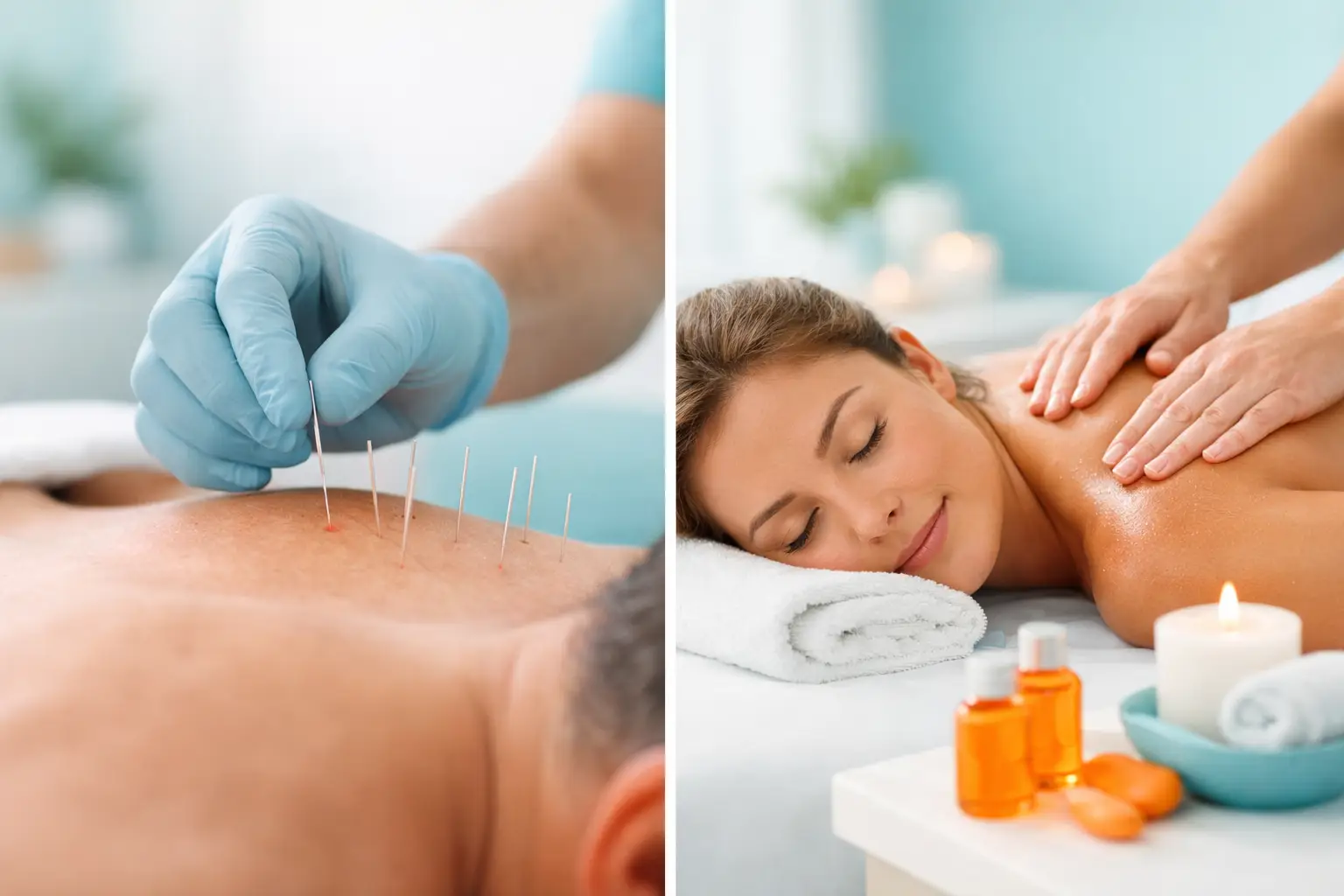
You wake with a stiff neck, a sore shoulder from training, or that familiar low back tension that builds after hours at a desk. When you start looking at treatment options, dry needling vs massage is a common comparison - and the right choice often depends on what your body is really asking for.
Both therapies can help with pain, tightness and recovery, but they work in different ways. One is usually more targeted and direct. The other is often broader, more soothing and ideal for reducing overall muscular tension. Neither is automatically better than the other. The best fit depends on your symptoms, your comfort level, and whether the goal is quick release, improved movement, nervous system calming, or a mix of all three.
Dry needling vs massage: what is the difference?
Dry needling uses very fine needles placed into tight or irritated muscle tissue, often called trigger points. The aim is to reduce muscle tension, ease referred pain, improve movement and support the body’s healing response. It is commonly used for sports injuries, persistent muscle tightness, neck and shoulder pain, headaches, hip tension, calf issues and lower back pain.
Massage works through hands-on pressure and soft tissue techniques to release tension, improve circulation and help muscles relax. Depending on the style, it can be gentle and calming or firmer and more corrective. Remedial massage, therapeutic massage and myotherapy-based soft tissue work may all be used to address pain, stiffness, postural strain and recovery after exercise.
If you want the simplest distinction, dry needling is very precise, while massage is more global. Dry needling often targets one key muscle or trigger point that is not letting go. Massage treats patterns of tightness across a region and can influence how the whole body feels.
When dry needling may be the better choice
Dry needling tends to suit pain that feels localised, stubborn or deeply set in the muscle. If you have a knot in the upper trapezius that keeps referring pain into your head, or a glute muscle that is affecting your hip and lower back, a needle can sometimes release that area more directly than hands-on pressure alone.
It can be especially helpful when a muscle is hard to reach with massage, or when pressure on the area feels too uncomfortable. For some people with acute sports injuries or recurring movement restrictions, dry needling helps create a faster change in muscle tone and range of motion.
This is one reason active adults and athletes often choose it. If your calf is tightening after runs, your shoulder is not moving freely in the gym, or your forearm is flaring up from racquet sport or repetitive work, dry needling may form part of a focused rehabilitation approach.
That said, it is not a magic fix. The release can be powerful, but if the underlying driver is poor loading, posture, stress, sleep disruption or a movement pattern that keeps aggravating the area, symptoms can return. In many cases, dry needling works best as part of a broader plan rather than a standalone answer.
When massage may be the better choice
Massage is often the better option when your whole body feels wound up rather than one small area being the obvious problem. If your shoulders are lifted, your jaw is tight, your sleep has been poor and stress is sitting in your body, massage can help calm both the muscles and the nervous system.
It is also a strong choice for general muscular soreness, maintenance care, postural tension and recovery between training sessions. For office workers, tradies, busy parents and anyone carrying physical or emotional stress, massage can create relief that feels both physical and mental.
Another advantage is that massage allows the practitioner to assess larger movement and tension patterns as they work. Tight hips may be connected to the lower back. A sore neck may be influenced by the chest, shoulders and upper back. Massage gives room to address the chain, not just the loudest point.
For patients who feel nervous about needles, massage is often the more comfortable starting point. Once the body settles and trust is built, other therapies can be introduced if needed.
What does each treatment feel like?
This matters more than people think. Choosing a treatment is not only about clinical logic. It is also about what you are comfortable with.
Dry needling can create a brief twitch response, a deep ache, or a strange but short-lived sensation in the muscle. Some areas feel surprisingly mild. Others can feel intense for a moment, especially if the tissue is highly irritated. After treatment, the muscle may feel looser, but you can also feel a little sore for a day or two.
Massage usually feels more familiar and predictable. Pressure can be adjusted, treatment can be slower, and many people leave feeling lighter, calmer and more mobile. Firmer remedial work can still be tender, but it is generally less confronting for people who dislike sharp or sudden sensations.
Neither experience should feel unsafe or overwhelming. Good care is always tailored. A skilled practitioner will explain what they are doing, check in with you throughout, and adapt treatment to your comfort level.
Dry needling vs massage for sports injuries and recovery
For sports injuries, the answer is often not either-or. It is often both, used at the right time and for the right reason.
Dry needling can help reduce guarding in overloaded muscles, improve activation patterns and make movement easier during rehabilitation. Massage can support circulation, reduce post-training tightness, improve recovery and address surrounding compensations. If you have a knee issue, for example, the problem may not sit only at the knee. Quads, calves, glutes and hip mechanics may all play a role.
That is where an integrated approach becomes valuable. Rather than chasing symptoms, treatment can look at how the body is functioning as a whole. For an athlete, that may mean combining soft tissue work with mobility advice, exercise-based rehab and hands-on care that supports performance as well as pain relief.
Which is better for chronic pain or stress-related tension?
If pain has been around for months, or it seems to flare when life gets busy, the picture is usually more layered. Muscles do not tighten in isolation. Stress, poor sleep, past injury, posture, workload and nervous system overload can all contribute.
Massage often shines here because it can settle the body while also improving mobility and comfort. Dry needling may still help, especially where there are specific trigger points driving pain, but ongoing relief usually comes from understanding the broader pattern.
This is particularly relevant for headaches, jaw tension, upper back tightness and recurring neck pain. In these cases, the body may benefit from more than local treatment. A holistic assessment can help identify whether soft tissue work alone is enough or whether other therapies and lifestyle support should be part of the plan.
How to decide what is right for you
The best treatment is the one that matches both your presentation and your preferences. If you have a very specific, stubborn muscle issue and you are comfortable with needles, dry needling may be the most direct option. If your body feels generally tight, overworked or stress-loaded, massage may be the better place to begin.
Sometimes the decision comes down to timing. If you are in acute pain and need precise release around a sports injury, dry needling may help. If you are run down, sensitive and holding tension everywhere, massage may be more supportive.
It also depends on your goals. Are you trying to get through a week without headaches, recover well after training, move better during pregnancy, or stop a recurring niggle from becoming a bigger problem? The answer shapes the treatment.
At Neurohealth Wellness, this is where personalised care matters. A thoughtful assessment helps determine whether dry needling, massage, or a combination of therapies is most likely to give you safe, lasting improvement.
The real question is not which one is best
The real question is which one is best for your body, right now. Dry needling and massage both have a place in effective, natural care. One may be the better fit today, while the other becomes more useful as your recovery progresses.
If you are unsure, start with a practitioner who will look beyond the sore spot, listen carefully, and tailor treatment to your comfort, goals and overall health. The right hands-on care should not leave you guessing. It should help you feel understood, supported and more at ease in your body.


