


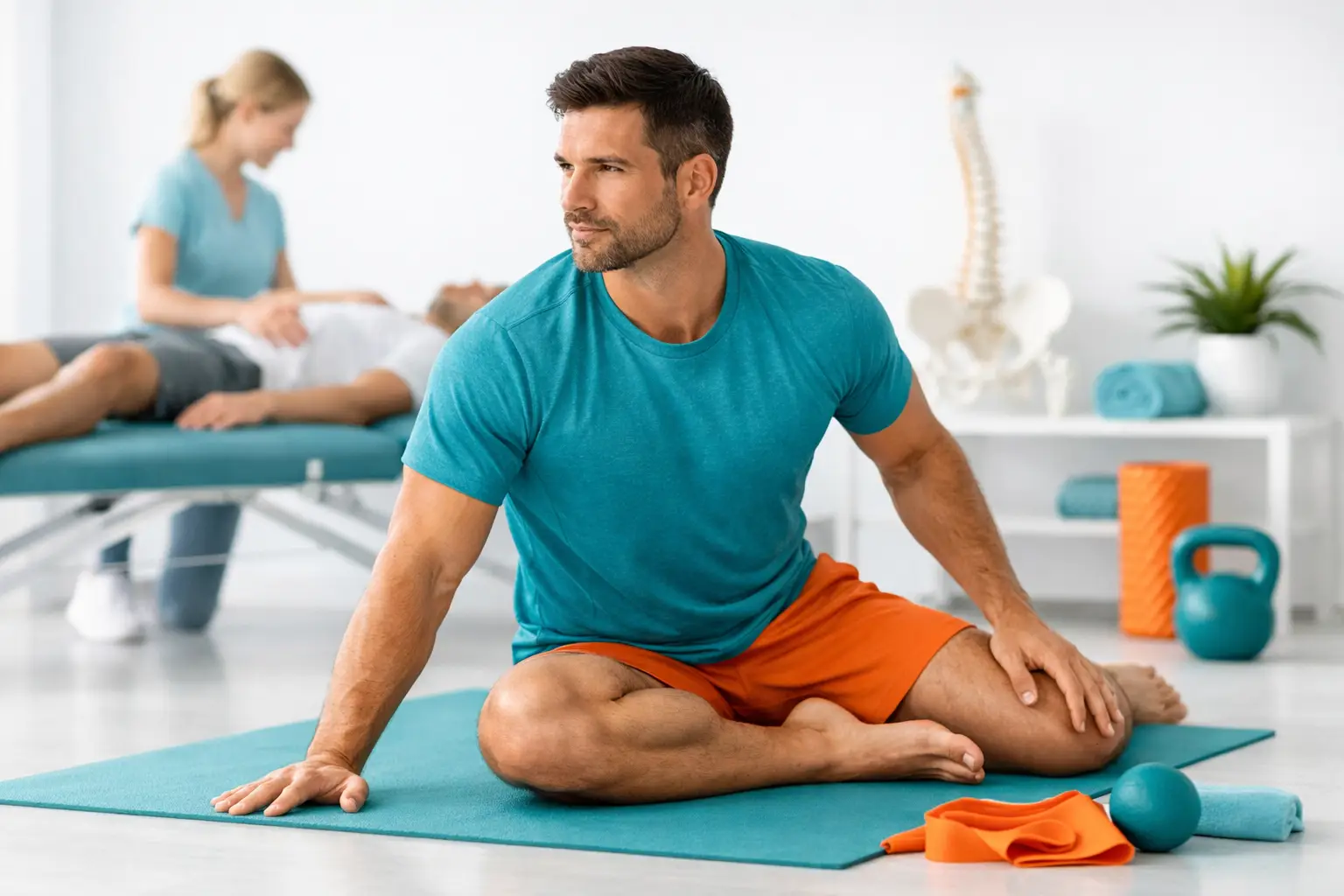
A deep squat that feels blocked, a stride that shortens late in a run, or a sharp pinch when changing direction can all point to the same area: the hips. Hip mobility for athletes is not about forcing yourself into impressive stretches. It is about having enough comfortable, controlled movement to train, compete and recover with confidence.
Your hips sit at the centre of almost every athletic movement. They help transfer force from the ground through your trunk, stabilise the pelvis and allow your legs to accelerate, decelerate, rotate and change direction. When movement is restricted or poorly controlled, the body often finds a workaround. That may show up as lower-back tightness, knee discomfort, hamstring strains or a feeling that one side simply does not fire as well as the other.
Why hip mobility matters in sport
Whether you play footy, run the coastal trails, surf, cycle, lift weights or enjoy weekend tennis, your sport asks something different of your hips. A sprinter needs extension behind the body. A footballer needs rotation and control through cuts and kicks. A cyclist spends long periods in hip flexion, while a surfer needs the capacity to move quickly from a crouched position into a standing stance.
Mobility is not the same as flexibility. Flexibility describes how far a joint or muscle can move, while mobility includes the strength, coordination and control to use that range. An athlete may be able to pull a knee easily towards their chest, for example, but still struggle to control the pelvis during a single-leg squat.
This distinction matters. More range is not always better, especially if it is unstable or painful. The goal is useful movement for your body and your sport, not chasing the deepest stretch in the room.
Signs your hips may need attention
Hip restrictions do not always feel like hip pain. You may notice stiffness after sitting at work, reduced depth in a squat, difficulty getting comfortable in a lunge or a persistent pull at the front of the hip after training. Some athletes feel a pinch in the groin when bringing the knee up, while others experience recurring tightness in the glutes, hamstrings or lower back.
It is also worth paying attention to side-to-side differences. One hip may rotate more freely, one leg may feel less stable when landing, or you may consistently shift your weight in a squat or deadlift. These patterns are not automatically a problem, but they are useful clues when they coincide with pain, reduced performance or repeated injuries.
A sharp pain, catching, locking, giving-way sensation, significant loss of movement or pain that does not settle deserves an individual assessment. Pushing through these symptoms with more stretching can make a sensitive area worse.
Common reasons athletes lose hip movement
Training load is a major factor. Hard sessions, sudden increases in running kilometres, tournament schedules and insufficient recovery can leave the tissues around the hips feeling guarded and stiff. Sitting for work, commuting and long drives can add to the picture, particularly for athletes who already spend a lot of time in flexed positions such as cyclists and rowers.
Past injuries matter too. An old ankle sprain can change how you load the leg. Knee pain may lead you to avoid certain positions. A previous back or groin issue can affect how confidently your nervous system allows movement around the pelvis and hips.
Then there is technique and strength. Limited control through the trunk, glutes and feet may make the hip work harder than it needs to. This is why a whole-body approach is often more helpful than treating the hip as an isolated joint.
A practical approach to hip mobility for athletes
The most useful routine is usually short, consistent and tailored to the movements you need. Rather than spending 30 minutes aggressively stretching before every session, aim to prepare the hips with controlled movement, then build strength through the ranges you want to own.
Start with gentle, controlled range
Before training, choose movements that take the hip through comfortable range without forcing it. Hip circles, supported deep squat holds, adductor rock-backs and slow lunges with a reach can be effective options. Move deliberately and breathe normally. If you feel a sharp pinch or pain, reduce the range or stop.
For runners and field sport athletes, a few controlled leg swings can be useful when performed with balance and purpose rather than momentum. For gym training, bodyweight squats and split squats can help you assess how the hips feel before adding load.
Build strength where you need it
Mobility tends to last when it is supported by strength. Split squats, step-ups, single-leg Romanian deadlifts, lateral lunges and controlled hip bridges can all build capacity around the hips when selected and progressed appropriately.
The right exercise depends on your sport, injury history and current tolerance. Someone with groin irritation may need a different starting point from someone whose main issue is limited hip extension after long days at a desk. Quality matters more than loading up quickly. A movement should feel challenging but controlled, without increasing symptoms during or after the session.
Do not forget rotation and side-to-side control
Many common gym movements happen in a straight line, yet sport often does not. Rotation at the hip and stability on one leg are particularly relevant for kicking, cutting, landing, throwing and uneven surfaces.
Controlled rotational drills, lateral strength work and single-leg exercises can help, provided they match your needs. If a hip feels restricted in rotation, forcing it may not be the answer. Sometimes the limitation is coming from pelvic control, surrounding muscle tension, training fatigue or a joint that needs a more careful assessment.
Recovery supports better movement
Mobility work is more effective when recovery is not neglected. Sleep, hydration, adequate food intake and sensible programming all affect how your body feels and performs. If every session leaves you very sore, stiff or flat, the answer may be to adjust training volume, intensity or exercise selection rather than adding more drills.
Hands-on care can also support an athlete’s recovery plan. Remedial or therapeutic massage and myotherapy may help address muscle tension and movement restrictions, while chiropractic care can assess joint movement, posture and broader body mechanics. Acupuncture or dry needling may be considered in an individual treatment plan where appropriate. These options work best alongside active rehabilitation, not as a replacement for building strength and movement confidence.
At Neurohealth Wellness, sports injury care and rehabilitation can bring these pieces together through a personalised assessment. Looking at the hips alongside the lower back, knees, ankles, training demands and recovery habits helps identify the patterns that may be limiting your movement.
When stretching can be unhelpful
Stretching has a place, particularly when it feels relieving and improves how you move. But it is not a universal fix. If your hip is irritable, very loose or painful at the end of range, long and intense stretches may aggravate symptoms. The same applies when stretching is used to repeatedly push through a pinching sensation at the front of the hip.
For some athletes, the missing piece is strength and control, not more range. For others, gentle movement and temporary load modification are needed before heavier strengthening begins. This is why online routines can be a useful starting point but cannot replace a proper assessment when pain keeps returning.
Make it part of your training week
A sustainable mobility plan does not need to be complicated. A five to 10-minute movement preparation before training, followed by two or three strength-focused sessions across the week, is often more valuable than an occasional long session. Reassess how your squat, stride, lunge or sport-specific movement feels over several weeks, rather than judging progress after one day.
Give your hips the same attention you give your skills, conditioning and recovery. Comfortable, capable movement is built gradually, and the right support can help you keep doing the sport you enjoy for longer.


