


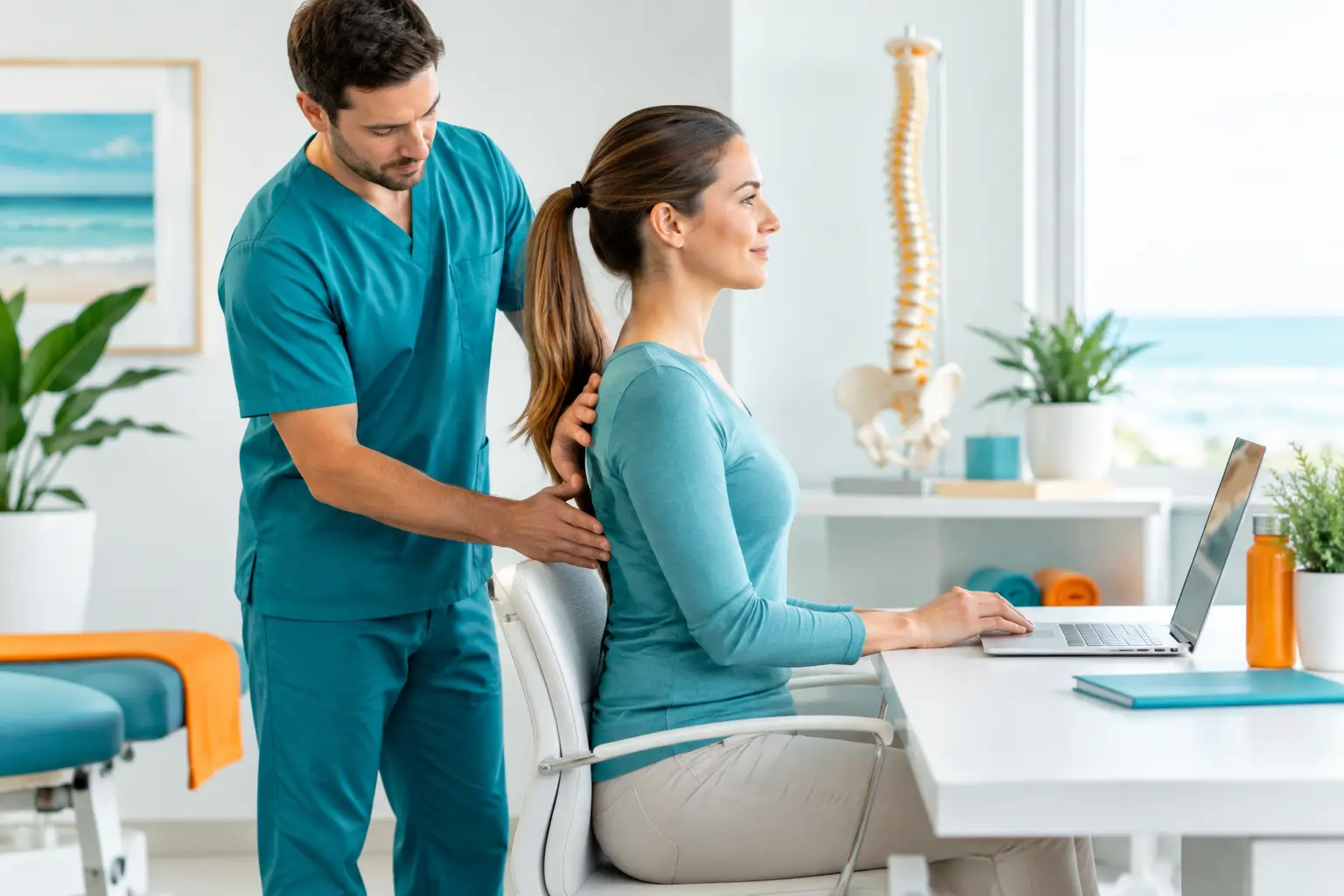
A stiff neck after emails, an ache between the shoulder blades on the drive home, or a low back that protests after a weekend in the garden can all make you wonder whether your posture is the problem. This posture correction guide offers a more useful starting point: posture is not about forcing yourself to sit perfectly straight all day. It is about helping your body move, rest and handle daily demands with greater comfort and confidence.
Good posture is dynamic. Your body is designed to change positions, walk, reach, lift, breathe and adapt. When certain positions are held for too long, or when pain, stress, injury or reduced mobility changes the way you move, muscles and joints can become overloaded. Small, consistent changes can make a meaningful difference.
What posture really means
Posture is the way your body is organised when you are sitting, standing, sleeping or moving. It involves far more than your shoulders or the curve of your spine. Your feet, hips, rib cage, head, breathing patterns, muscle strength, joint mobility and nervous system all play a part.
There is no single ‘perfect’ posture that suits every person. A runner with tight calves, a new parent feeding a baby, an office worker at a laptop and a tradie lifting equipment all place different demands on their bodies. The best posture for you is one that allows you to move freely, breathe easily and tolerate your usual activities without persistent pain or excessive fatigue.
This is why simply pulling your shoulders back can be an incomplete solution. If your upper back is stiff, your work set-up is poorly matched to your height, or your core and hip muscles are not sharing load well, forcing a position may create more tension. A whole-body approach looks for the reasons your body is compensating, then supports gradual, sustainable change.
Posture correction guide: start with your daily habits
Postural discomfort often builds through repetition. You do not need to overhaul your routine overnight, but you do need to notice the positions you return to most often.
Set up your workspace for movement, not rigidity
For desk work, position your screen so you can look ahead without constantly bending your neck. Keep your keyboard and mouse close enough that your shoulders can stay relaxed, and use a chair that supports you comfortably. Your feet should be supported by the floor or a stable footrest, rather than dangling.
These adjustments matter, but regular movement matters more. Even an excellent workstation cannot make eight hours of stillness comfortable. Aim to stand, walk, stretch or change tasks briefly every 30 to 60 minutes. A few minutes to refill your water, take a lap around the office or gently move your shoulders can reduce the build-up of tension.
If you work from the kitchen bench, the couch or a shared home office, make the best of what you have. A stack of books can raise a laptop screen, a separate keyboard can bring your arms into a more natural position, and a supportive cushion may improve sitting comfort. The goal is practical improvement, not a picture-perfect workspace.
Share the load when standing and walking
When standing, avoid locking your knees or leaning heavily into one hip for long periods. Let your weight feel evenly distributed through both feet, soften your knees and allow your arms to rest naturally. If you notice yourself gripping through your jaw, shoulders or buttocks, take a slow breath out and let some of that effort go.
Walking is one of the simplest ways to interrupt prolonged sitting and restore natural movement. Start with a pace and distance that feels manageable. For some people, a gentle walk along the Northern Beaches footpaths is a helpful reset; for others recovering from injury, a shorter, more structured plan may be more appropriate.
Rethink your phone habits
Looking down at a mobile for long stretches can leave the neck and upper back working harder than necessary. Bring the screen closer to eye level when possible, alternate hands and avoid long scrolling sessions with your head bent forward. This does not mean you must hold your phone perfectly at all times. It means giving your neck regular breaks from one sustained position.
Build strength and mobility where your body needs it
Posture is supported by strength, but not by endlessly bracing or holding tension. Your body benefits from muscles that can switch on when needed and relax when they are not. For many people, building capacity through the hips, legs, upper back and trunk makes everyday tasks feel easier.
A balanced exercise plan may include walking, controlled strength work, mobility exercises and activities you genuinely enjoy. Squats to a comfortable depth, rowing movements, gentle upper-back strengthening and hip exercises can all be useful when they suit your needs and technique. The right choices depend on your current fitness, injury history, pregnancy or postpartum stage, and goals.
Mobility also deserves attention. Tightness around the chest, upper back, hips or ankles can influence how you stand and move. Gentle thoracic rotations, chest-opening movements and hip mobility work may help, particularly when followed by movement that teaches your body to use its available range. Stretching alone can feel good, but its effects are often short-lived if the underlying load, strength or work habits remain unchanged.
If an exercise causes sharp pain, pins and needles, worsening symptoms or discomfort that lingers, stop and seek professional guidance. Pushing through is not a reliable path to better posture.
Do not overlook breathing, stress and sleep
Your posture can change when you are stressed. You may lift your shoulders, clench your jaw, hold your breath or brace through your abdomen without realising it. These responses are common, especially during demanding workdays, periods of poor sleep or when pain has been present for a while.
Slow breathing can be a simple circuit-breaker. Try sitting or standing comfortably, letting your ribs expand gently as you breathe in, then taking a slightly longer, unforced breath out. There is no need to force a deep breath. The aim is to reduce unnecessary effort and help your body settle.
Sleep position can matter too, although there is no universal ‘best’ position. A pillow that keeps your neck supported rather than sharply bent can improve comfort. Side sleepers may benefit from a pillow between the knees, while back sleepers may find a small cushion under the knees reduces low-back strain. What works depends on your body, your mattress and any existing pain.
When posture needs a professional assessment
It is sensible to seek care if postural discomfort is persistent, interfering with work, sport, sleep or family life, or returning despite your efforts. An assessment can help distinguish between everyday muscle tension and factors such as joint restriction, an old sports injury, muscle imbalance, nerve irritation or movement patterns developed to avoid pain.
Prompt medical assessment is particularly important if you have new weakness, numbness, unexplained weight loss, fever, significant trauma, changes to bladder or bowel control, or severe pain that is rapidly worsening.
At Neurohealth Wellness, a personalised assessment considers more than the area that hurts. Depending on your needs, care may include chiropractic, remedial or therapeutic massage, myotherapy, acupuncture and rehabilitation guidance to support movement, reduce tension and build resilience. For athletes, posture work may also form part of a broader sports injury or performance plan, whether the issue involves the shoulder, hip, knee, ankle, elbow or wrist.
Make change small enough to repeat
The most effective posture plan is usually the one you can maintain. Choose one workspace adjustment, one movement break and one simple exercise or walk to begin with. Give your body time to adapt, especially if pain or stiffness has been present for months or years.
Notice what improves your comfort: perhaps your neck feels freer after a lunchtime walk, or your back is less irritable when you change position regularly. Those observations are valuable. With patient, individualised care and everyday movement habits that fit your life, better posture can become less about holding yourself in place and more about feeling at ease in your body.


