


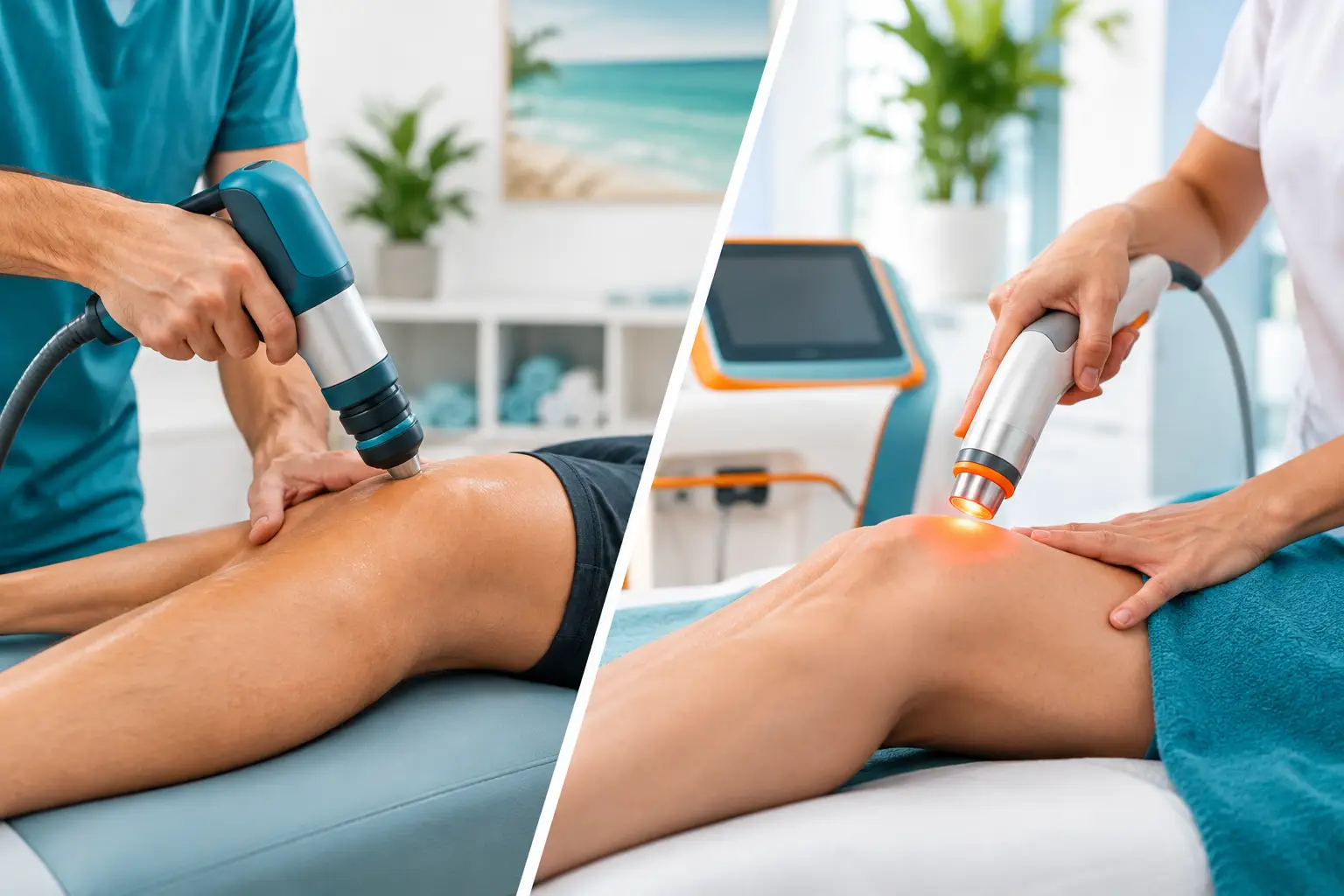
A sore Achilles that will not settle, a stubborn tennis elbow, or a shoulder that complains every time you reach overhead can make training, work and everyday movement feel frustrating. When comparing shockwave therapy vs laser therapy, the better option is rarely about choosing the newest machine. It is about understanding the type of tissue involved, how long symptoms have been present, your health history and what your body needs to recover well.
Both treatments are non-invasive and can be used as part of a broader plan for pain, mobility and sports injury rehabilitation. They work differently, however, and they are not interchangeable. A careful assessment helps determine whether one may be suitable, whether a combination approach makes sense, or whether hands-on treatment and targeted exercise should lead the way.
Shockwave Therapy vs Laser Therapy: The Key Difference
Shockwave therapy uses acoustic pressure waves delivered through a handheld device. These waves are directed into a specific area of tissue, commonly where a tendon has become painful, thickened or slow to recover. Treatment aims to stimulate the body’s natural healing response, improve local circulation and support tissue remodelling over time.
Laser therapy, also called low-level laser therapy or photobiomodulation, uses particular wavelengths of light to influence cellular activity in the treated area. The light energy is intended to support circulation, reduce irritation and assist the body’s repair processes without heating or damaging tissue.
Put simply, shockwave is often chosen for persistent tendon-related conditions where a stronger mechanical stimulus may be helpful. Laser therapy is usually a gentler option that may be used for pain, inflammation and soft-tissue recovery across a wider range of presentations. Neither therapy is a quick fix on its own. The best results tend to come when treatment is paired with the right loading, movement and recovery plan.
When Shockwave Therapy May Be a Good Fit
Shockwave therapy is most often considered for long-standing musculoskeletal pain that has not responded as expected to rest, activity changes or initial care. It is particularly well known for certain tendon and fascia concerns, where tissue can become sensitive and less able to cope with normal load.
A practitioner may consider shockwave as part of care for plantar heel pain, Achilles tendinopathy, tennis or golfer’s elbow, patellar tendon pain around the knee, gluteal tendon pain at the outside of the hip, or some shoulder tendon complaints. For active people on Sydney’s Northern Beaches, this can be relevant when running, gym training, surfing, court sports or physical work continues to aggravate a stubborn area.
Treatment is brief, but it can feel intense or uncomfortable while the waves are being applied. Your practitioner can adjust the settings and work within your tolerance. It is common to have temporary tenderness, redness or a mild ache afterwards. Some people notice a change early, while others need a series of sessions and gradual rehabilitation before meaningful improvements become clear.
Shockwave is not automatically the right choice simply because pain has lasted a long time. Pain can come from joints, nerves, muscle referral, movement patterns or a combination of factors. Treating a tendon when the main driver is elsewhere may not address the root cause.
The role of rehabilitation after shockwave
For many tendon concerns, carefully graded loading is essential. This may involve specific calf, hip, shoulder or forearm exercises, along with advice on how to modify training without losing all momentum. A period of complete rest can sometimes reduce symptoms temporarily but leave the area less prepared for the demands that caused the problem in the first place.
Shockwave can support the rehabilitation process, but it does not replace it. Your treatment plan should reflect your goals, whether that is walking comfortably, getting through a shift without elbow pain, returning to a fun run or performing more confidently in sport.
When Laser Therapy May Be More Suitable
Laser therapy is generally comfortable and often feels like very little at all during treatment. It may be used to support recovery in irritated muscles, tendons, ligaments and joints, especially where sensitivity makes a more forceful approach unsuitable.
It can be considered for recent soft-tissue injuries, muscle strains, joint irritation, minor sporting knocks, neck and back discomfort, and tendon pain that is still reactive. Laser may also fit into a treatment plan when the aim is to settle symptoms enough for hands-on therapy, movement work or exercise to become more comfortable.
The experience is different from shockwave. There is no repetitive tapping sensation, and it is usually well tolerated by people who are wary of treatment that may provoke their pain. That said, gentle does not mean ineffective, nor does it mean laser is the best answer for every condition. Its benefits depend on the diagnosis, the dose used, the stage of recovery and the quality of the wider care plan.
Laser therapy and acute injuries
If you have rolled an ankle, strained a muscle or developed a painful flare-up after increasing training, the first priority is a proper assessment. Swelling, bruising, loss of strength or inability to bear weight may need more than symptom management. Laser therapy may be used alongside advice about protecting the area, restoring mobility and progressively rebuilding strength.
For athletes, the goal is not just to feel better by the weekend. It is to return with enough capacity to reduce the risk of the same injury recurring when intensity picks up again.
What the Research Means for Your Decision
Both shockwave and laser therapy have research supporting their use for particular musculoskeletal conditions, but results are not identical for every diagnosis. Studies use different devices, treatment settings, session numbers and rehabilitation programmes. This is one reason a treatment that helps a friend’s heel pain may not be the best match for your shoulder or knee.
For persistent plantar heel pain and some tendinopathies, shockwave has a useful evidence base and is commonly included in conservative care plans. Laser therapy also has encouraging evidence for certain pain and soft-tissue presentations, although outcomes can vary according to the condition and treatment parameters.
A good clinical decision considers evidence alongside the individual in front of the practitioner. How irritable is the pain? Is the injury recent or longstanding? What activities matter most to you? Are there sleep, stress, workload or recovery factors that may be slowing healing? These questions are central to a whole-body approach.
Safety and When Treatment Needs Extra Care
Both therapies should be delivered after a health assessment rather than chosen from a menu. A practitioner will discuss your symptoms, medical history, medications, previous injuries and goals before recommending care.
Shockwave may not be appropriate over an area with infection, suspected fracture, certain circulation or bleeding concerns, a known tumour, or during pregnancy over the treatment region. Extra caution may be needed if you take blood-thinning medication or have altered sensation.
Laser therapy requires eye protection and should not be directed into the eyes. Your practitioner will also consider factors such as pregnancy, cancer history, photosensitising medication and the area being treated. If pain is severe, unexplained, associated with fever, major swelling, numbness, weakness or a significant injury, it is important to seek appropriate medical assessment first.
Choosing the Right Therapy for Your Body
The most useful question is not, “Which treatment is better?” It is, “What is likely driving my symptoms, and what will help me return to the life I want to live?” Someone with chronic Achilles pain may benefit from shockwave combined with progressive calf strengthening. Someone with a fresh shoulder strain may respond better to laser therapy, massage or myotherapy, movement support and a gradual return to training.
At Neurohealth Wellness, care can be tailored across complementary therapies rather than forcing every problem into one treatment method. A practitioner may combine laser or shockwave with hands-on care, dry needling, remedial massage, chiropractic support or rehabilitation guidance where appropriate. The aim is to reduce pain while also improving the movement, strength and confidence that help you stay active.
If you are unsure which option suits your injury, booking an assessment is a sensible first step. The right plan should feel clear, realistic and centred on your goals. With thoughtful treatment and steady rehabilitation, your body has a better chance to recover not only for the next activity, but for the everyday moments that matter too.


