


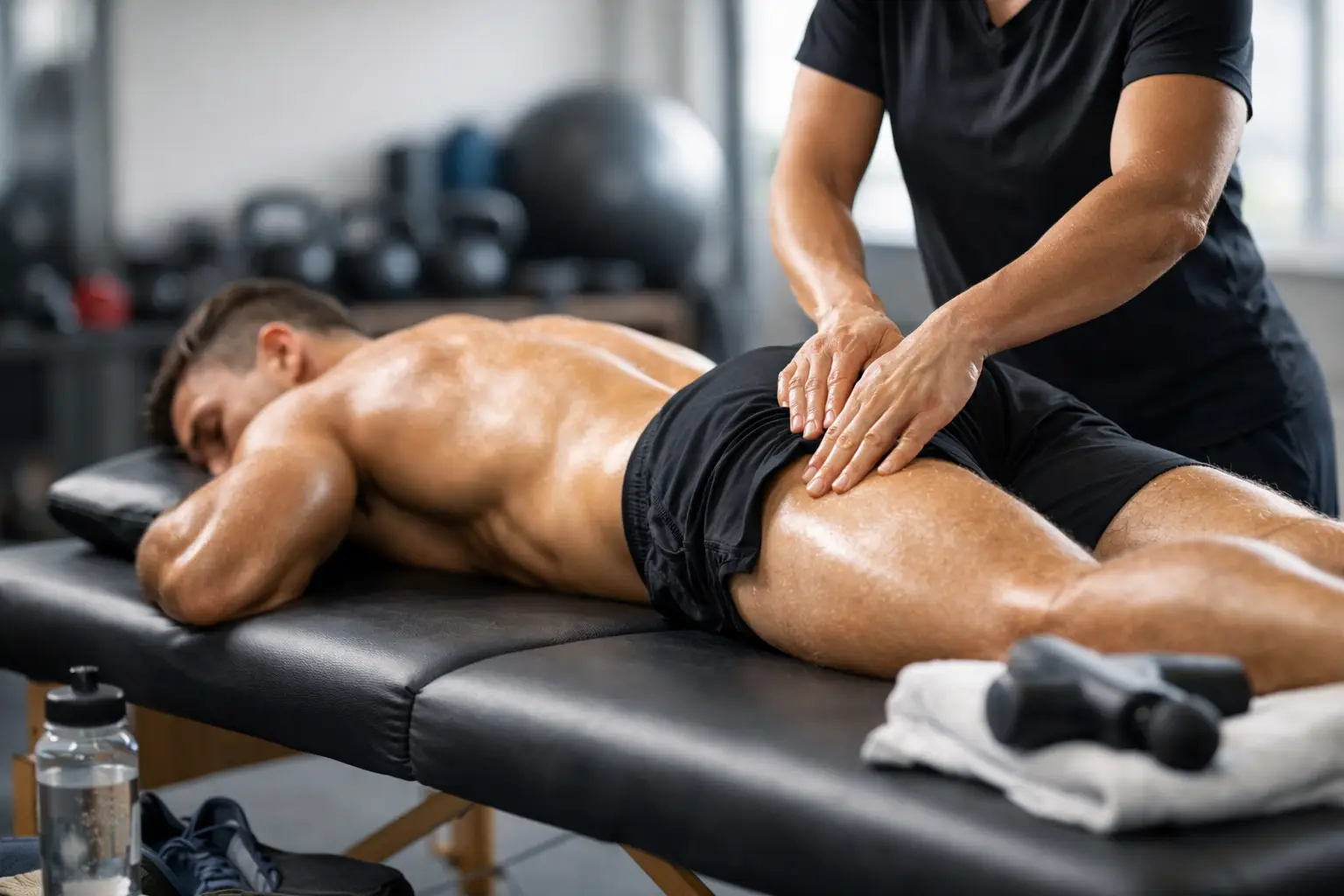
You do not need to be training for a marathon to benefit from sports massage. For many people on Sydney’s Northern Beaches, it is the difference between carrying tight, overworked muscles through the week and moving with far less discomfort, stiffness and fatigue. Whether you are running, lifting, surfing, cycling, playing team sport or simply dealing with the physical load of work and exercise, the right treatment can help your body recover and perform more comfortably.
What sports massage actually does
Sports massage is a targeted form of massage designed to support muscles, soft tissue and movement patterns that are under physical stress. That stress may come from training, competition, repetitive work, poor posture, returning to exercise after time off, or an existing injury that is changing the way you move.
Unlike a relaxation massage, the goal is not simply to help you switch off, although many people do leave feeling calmer. The focus is more specific. Treatment is usually directed at areas of tightness, restriction, overuse or compensation, with pressure and technique adjusted to suit the tissue, the injury history and your current training load.
This is where a personalised approach matters. Two people can both walk in with calf tightness, but one may be dealing with overload from hill running while the other is compensating for poor ankle mobility after an old sprain. The symptom can sound the same, yet the reason behind it is different.
When sports massage can help
Sports massage is often used for recovery, but that is only part of the picture. It can also play a valuable role before an event, during periods of heavy training, and as part of rehabilitation after injury.
If your legs feel constantly heavy after runs, your shoulders tighten every time you increase swimming volume, or your lower back starts complaining after gym sessions, massage can help reduce excess muscle tension and improve how comfortably you move. For some people, that means better range of motion. For others, it means less soreness between sessions or fewer flare-ups in problem areas such as the neck, hips, knees or elbows.
It can also be useful when your body is telling you that something is off, even before it becomes a full injury. A recurring pull through the hamstring, a stubborn knot around the shoulder blade, or a calf that never quite settles often points to an underlying movement or loading issue. Hands-on treatment can calm irritated tissue, but it also gives your practitioner a chance to assess what else may be contributing.
Sports massage and injury recovery
When you are managing an injury, sports massage is usually most effective as one part of a broader plan. Soft tissue work can help ease guarding, improve comfort and support better movement around the affected area, but it is not a stand-alone fix for every problem.
That matters with common sports injuries. A sore knee may involve the quads, calves and hip muscles, but it may also relate to running load, foot mechanics or reduced hip control. Tennis elbow can respond well to work through the forearm, yet grip habits, shoulder function and training volume may also need attention. The same applies to ankle sprains, shoulder strains, hip pain and overuse issues through the wrist.
In a multidisciplinary clinic, this is where treatment can become more effective. Massage may be combined with myotherapy, chiropractic care, dry needling or rehabilitation strategies depending on what your body needs. The aim is not only to settle pain, but to restore function and reduce the chance of the same issue returning.
What to expect during a sports massage session
A good sports massage should never feel generic. Your practitioner should ask what you are feeling, what activities you do, whether there is a current injury, and what you want from the session. Some people need support before a sporting event. Others need post-event recovery, help with chronic tightness, or treatment while they build back from injury.
From there, the session is tailored. Pressure may be firm, but firmer is not always better. Effective treatment is about matching the technique to the tissue and your tolerance, not trying to force the body to release. In some cases, gentler and more precise work gets a better result than deep pressure alone.
You may feel temporary tenderness in areas that are particularly tight or overloaded, and mild post-treatment soreness can happen, especially if tissues were very restricted to begin with. That said, you should still feel that the treatment was purposeful, respectful and manageable. Communication matters throughout.
Does sports massage improve performance?
It can, but the answer depends on what is limiting you.
Sports massage is not a magic shortcut to faster times or bigger lifts. What it can do is support the conditions that allow better performance. If muscle tension is restricting your range, if soreness is reducing training quality, or if niggles are changing your mechanics, treatment may help you move more freely and recover more efficiently.
For active adults and athletes, that can mean being able to train more consistently. And consistency is often what makes the biggest difference over time.
There is also a nervous system component that people often overlook. When the body is under ongoing physical stress, muscles tend to stay guarded. Hands-on treatment can help settle that protective tension and improve body awareness, which may make movement feel smoother and less effortful. It is one reason many people say they feel more balanced after treatment, not just looser.
How often should you have sports massage?
There is no one schedule that suits everyone. Frequency depends on your sport, training volume, recovery capacity, injury history and goals.
Someone in the middle of event preparation may benefit from more regular treatment than someone who exercises a few times a week for general fitness. If you are recovering from a strain, dealing with persistent tightness, or returning to training after time off, shorter gaps between sessions may be useful early on. Once things settle, maintenance appointments can often be spaced further apart.
The key is to avoid waiting until your body is already shouting at you. Regular care is less about dependency and more about staying ahead of patterns that tend to build up over time.
Who sports massage suits
Despite the name, sports massage is not only for competitive athletes. It suits a wide range of people who place repeated physical demand on their bodies.
That includes weekend runners, gym-goers, tradies, dancers, surfers, cyclists and office workers trying to stay active around long days at a desk. Many people sit for work, train hard after hours, and wonder why their body never feels fully recovered. In that situation, massage can help bridge the gap between workload and recovery.
It can also be a helpful option for people returning to movement after an injury or a long break from exercise. Starting again is often when the body reveals old compensations. Addressing those early can make the process feel a lot more sustainable.
Why a whole-body approach matters
The area that hurts is not always the area that needs the most attention. Tight calves may reflect limited ankle mobility. Recurring shoulder tension may be linked to thoracic stiffness or training technique. Hamstring strain can have more to do with pelvic control and load management than the hamstring alone.
That is why assessment matters as much as treatment. In a clinic like Neurohealth Wellness, sports massage sits within a broader model of care that looks at movement, lifestyle, nervous system stress and recovery habits as well as local muscle tension. This kind of integrated thinking is especially useful when pain keeps returning or performance has plateaued without an obvious reason.
For some people, the next step after massage may be rehabilitation exercises. For others, it may be support from a chiropractor, myotherapist or another practitioner within the team. Good care is not about pushing one therapy for every problem. It is about choosing the right combination for the person in front of you.
Sports massage is most effective when it is timely
One of the biggest misconceptions is that you should only book once pain becomes severe. In reality, sports massage is often most helpful earlier, when the first signs appear. A heavy feeling in the legs, a shoulder that keeps tightening during training, or a hip that feels restricted after longer walks can all be signs that your body is compensating.
Addressing those patterns early may help prevent a smaller issue becoming a bigger interruption. It also tends to make treatment simpler, because the body has had less time to adapt around the problem.
If your goal is to move better, recover well and keep doing the activities you enjoy, sports massage can be a valuable part of that process. The best results usually come when treatment is tailored, well-timed and connected to the bigger picture of how your body functions day to day.


