


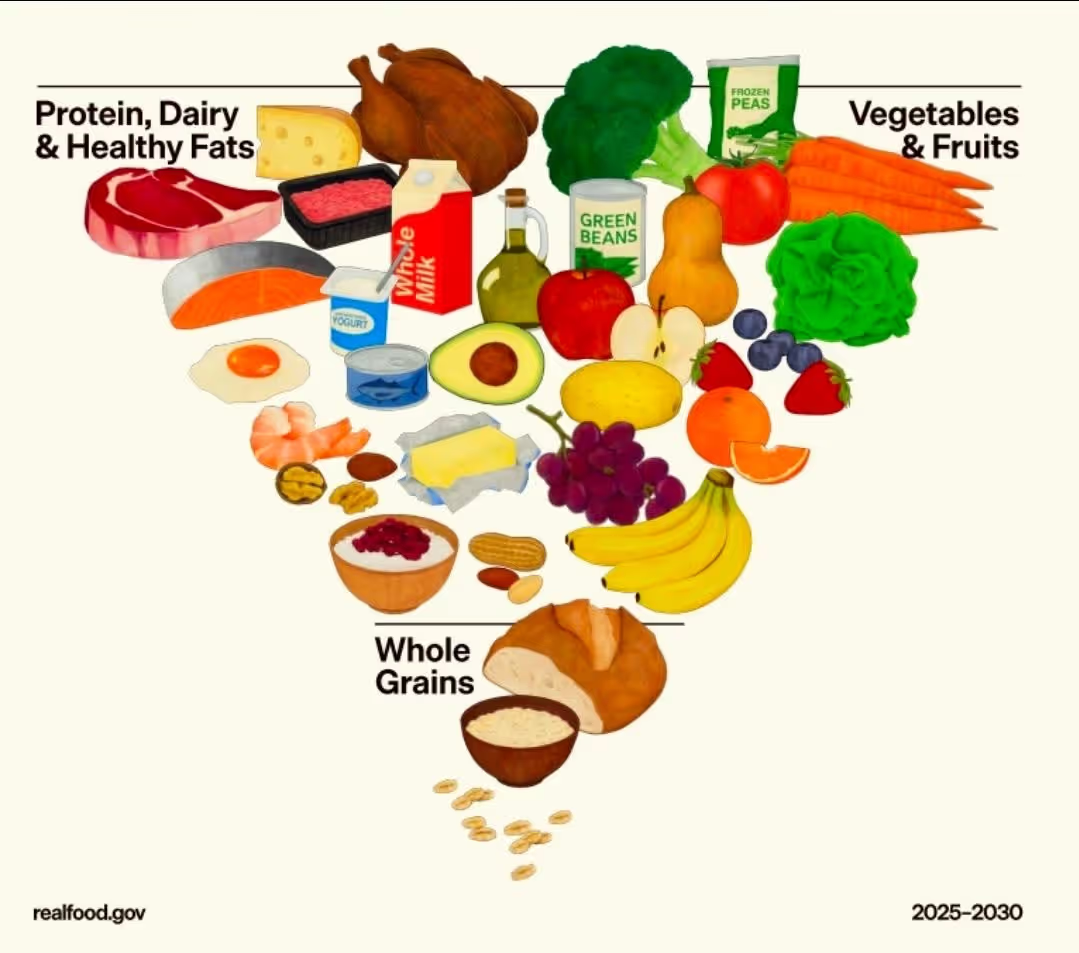
Why the Food Pyramid Changed — and What It Means for Pain, Inflammation & Recovery
If you’re exercising regularly, staying active, and even getting chiropractic care — yet pain, stiffness, or inflammation keeps creeping back — there may be a missing piece most people never think to question.
Your body cannot heal well in a chronically inflamed environment.
This is one of the main reasons the traditional food pyramid — the one many of us grew up with — was quietly abandoned. Modern nutrition science now recognises that what you eat directly affects inflammation, pain sensitivity, tissue repair, and long-term resilience.
And if your goal is not just short-term pain relief, but lasting improvement, this shift matters.
Why the Original Food Pyramid No Longer Holds Up
The original food pyramid, introduced in the early 1990s, encouraged people to base their diet on bread, cereal, rice, and pasta, while limiting fats and placing relatively little emphasis on protein quality or food processing.
At the same time this advice became widespread, rates of chronic pain, metabolic disease, obesity, and inflammatory conditions continued to rise.
Large-scale research has since shown that high intakes of refined carbohydrates and ultra-processed foods are strongly associated with systemic inflammation, insulin resistance, and poorer health outcomes. These effects don’t stay confined to metabolism — they influence how the nervous system processes pain and how tissues recover from stress or injury.
This growing body of evidence is why most evidence-based organisations no longer use a pyramid at all.
Many people are surprised to learn that what you eat can directly affect how your body processes pain and heals tissue, not just your weight or energy levels.
What Replaced the Food Pyramid — and Why
Modern dietary frameworks focus less on rigid food groups and more on food quality, balance, and biological impact.
Across evidence-based models, several consistent principles now appear:
Protein Is Foundational, Not Optional
Adequate protein intake supports muscle repair, connective tissue health, bone density, and healthy ageing. For people dealing with back pain, joint pain, or recurring injuries, protein provides the building blocks required for recovery and structural support.
Healthy Fats Are Essential
Unsaturated fats from sources like olive oil, nuts, seeds, and fish play a critical role in nervous system health and inflammatory regulation. The outdated “low-fat” message has been replaced with a more accurate one: fat quality matters more than fat avoidance.
Carbohydrate Quality Matters More Than Quantity
Highly refined grains and added sugars are now well-established drivers of inflammation. In contrast, vegetables, legumes, fruit, and intact whole foods behave very differently in the body, supporting steadier energy and better metabolic control.
The Nutrition–Inflammation–Pain Connection
From a Neurohealth perspective, pain is rarely just a local tissue problem.
Persistent or recurring pain is influenced by:
- Systemic inflammation
- Metabolic health
- Nervous system sensitivity
- Sleep and stress physiology
- Lifestyle load over time
Diet directly affects each of these.
Research consistently shows that diets high in ultra-processed foods are associated with increased inflammatory markers, while whole-food dietary patterns are linked to lower pain severity, improved physical function, and better long-term outcomes.
This is why nutrition isn’t separate from chiropractic care — it can either support healing or quietly slow it down.
Chronic pain is strongly influenced by inflammation and nervous system sensitivity, which is why addressing lifestyle factors alongside manual care is essential for long-term recovery.
How This Supports Chiropractic Care (Not Replaces It)
Chiropractic care improves movement, joint function, and nervous system regulation. But healing still requires the right internal environment.
A whole-body approach recognises that joint health, muscle recovery, and inflammation are all influenced by daily inputs, including food quality and stress load.
Poor nutrition can:
- Delay tissue repair
- Increase pain sensitivity
- Prolong inflammatory responses
- Reduce tolerance to physical load
Supportive nutrition, on the other hand:
- Improves recovery capacity
- Enhances strength and stability gains
- Supports long-term resilience
- Reduces reliance on reactive care
This aligns with Neurohealth Wellness’ focus on prevention, adaptability, and whole-body health — not just chasing symptoms.
A Simple, Evidence-Based Starting Point
You don’t need extremes, restrictions, or perfection.
A modern, research-supported plate generally looks like:
- Half vegetables (mostly non-starchy)
- A clear protein source at each meal
- Whole, minimally processed carbohydrates if tolerated
- Intentional use of healthy fats
- Water as the primary beverage
Even one small shift — such as adding protein to breakfast or reducing ultra-processed snacks — can meaningfully change how your body handles inflammation and recovery.
The Bigger Picture
The food pyramid didn’t change because of trends or opinions. It changed because decades of research showed that the old model wasn’t supporting long-term health or resilience.
If pain keeps returning, it’s worth asking not just where it hurts, but what environment your body is trying to heal in.
At Neurohealth Wellness, we look beyond isolated symptoms and consider how movement, the nervous system, and lifestyle inputs work together — because lasting change happens when the whole system is supported.
If pain keeps returning despite treatment, it’s worth exploring how nutrition, movement, and nervous system health interact rather than focusing on one area in isolation.
Ready to Take a More Proactive Approach?
Pain relief doesn’t have to rely on constant fixes or short-term strategies.
When nutrition, movement, and nervous system health align, the body becomes more adaptable — and care becomes preventative rather than reactive.
👉 Book an appointment at Neurohealth Wellness and take a whole-body approach to pain, recovery, and long-term health.
🔗 https://www.neurohealthwellness.com.au/booking
References
- Harvard T.H. Chan School of Public Health.
The Healthy Eating Plate
https://www.hsph.harvard.edu/nutritionsource/healthy-eating-plate/ - World Health Organization (WHO).
Healthy Diet – Fact Sheet
https://www.who.int/news-room/fact-sheets/detail/healthy-diet - Mozaffarian D. et al.
Role of Diet in Chronic Inflammation. BMJ, 2018
https://www.bmj.com/content/361/bmj.k2392 - Monteiro CA et al.
Ultra-Processed Foods and Health Outcomes. Public Health Nutrition, 2019
https://doi.org/10.1017/S1368980018003762 - Phillips SM, Van Loon LJC.
Dietary Protein for Muscle Health and Repair. Journal of Sports Sciences, 2011
https://doi.org/10.1080/02640414.2011.619204 - Calder PC.
Omega-3 Fatty Acids and Inflammatory Processes. BBA, 2015
https://doi.org/10.1016/j.bbalip.2014.08.010


