


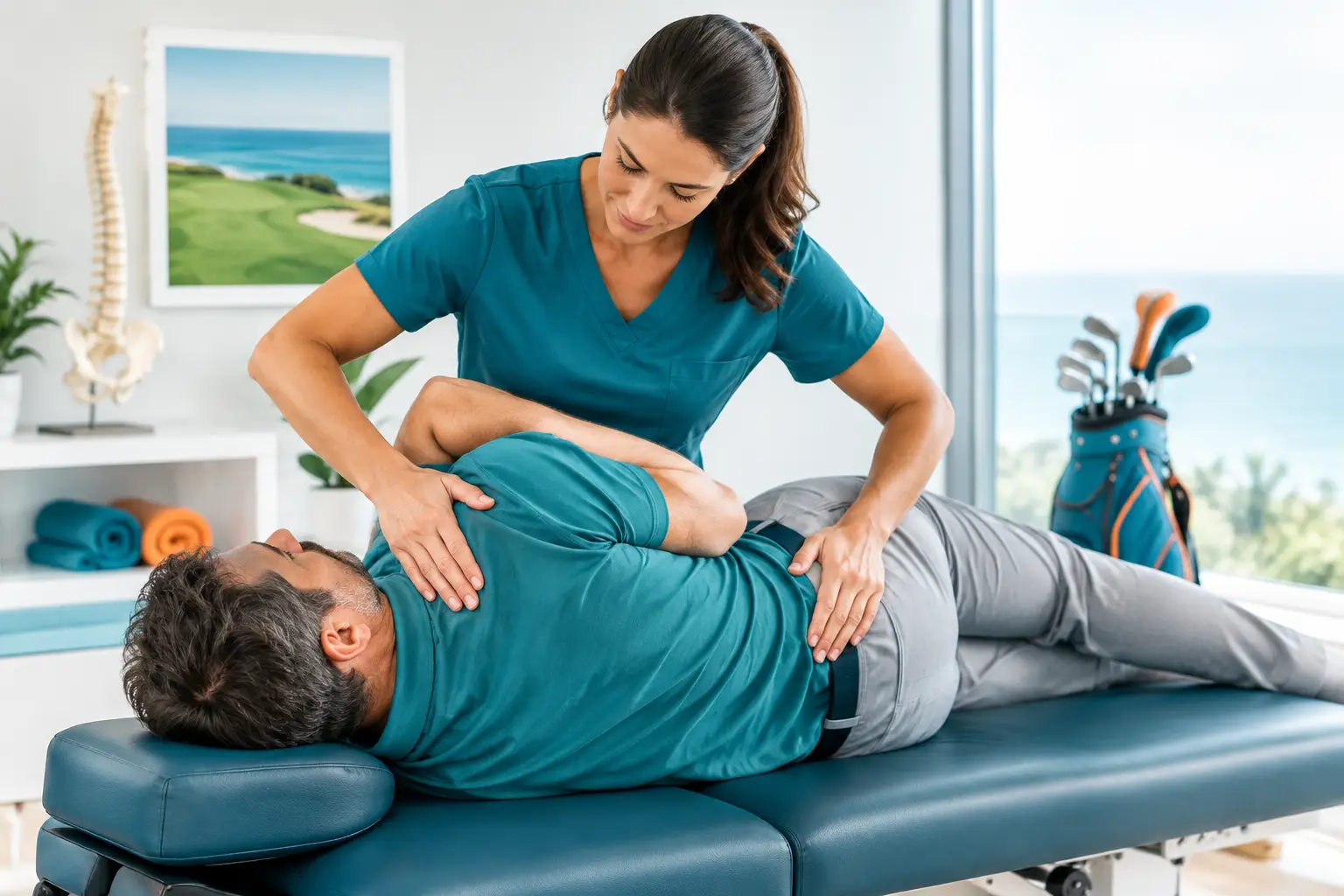
A round of golf can feel wonderfully low impact, until a stiff back makes the first tee shot uncomfortable or a nagging shoulder changes the way you swing. The benefits of chiropractic and golf are not about chasing a perfect score through treatment. They are about helping your body move more freely, manage physical load and recover well enough to enjoy the game for years to come.
Golf asks a great deal of the body in one repeated motion. Your feet need a stable base, your hips and thoracic spine need to rotate, your shoulders and wrists need control, and your nervous system needs to coordinate it all under pressure. When one area is restricted or painful, another often works harder to compensate. That can affect comfort, consistency and confidence on the course.
Why golf can expose movement restrictions
The golf swing is fast, rotational and one-sided. Even recreational golfers repeat the same sequence dozens of times in a round, then add practice sessions, driving range balls, carrying a bag and long periods in a car or at a desk. It is common for golfers to notice tightness through the lower back, neck, hips, elbows or shoulders.
The problem is not always where the pain is felt. A golfer with a sore lower back, for example, may also have limited hip rotation, reduced upper-back mobility or poor tolerance to repeated bending. Someone with elbow pain may be gripping the club tightly because their shoulder is not moving comfortably. This is why a whole-body assessment matters.
Chiropractic care can assess joint movement, posture, muscle tension and movement patterns that may be contributing to discomfort. At Neurohealth Wellness, care is personalised to the individual, their golfing goals, health history and the demands they place on their body.
Benefits of chiropractic and golf performance
More comfortable rotation through the swing
A smooth golf swing relies on rotation through the hips and thoracic spine, the middle portion of the back. When these areas are stiff, golfers may force movement through the lower back or shoulders. This can make the swing feel restricted and may contribute to soreness after a round.
Chiropractic treatment may include hands-on techniques aimed at improving joint movement and easing muscular tension. For some people, better mobility can make it easier to turn comfortably through the backswing and follow-through. The goal is not to create excessive flexibility. It is to help you access useful, controlled movement for your body.
Better awareness of posture and set-up
Posture is more than standing up straight. In golf, it affects how you hinge at the hips, hold the club, distribute weight through your feet and maintain balance as you move. Long hours at a computer, a previous injury or everyday stress can all influence how your body feels at address.
A chiropractor can help identify postural habits and movement restrictions that may be relevant to your set-up. Small, practical changes, combined with targeted mobility or strengthening advice, can help golfers feel more balanced rather than relying on force to create a swing.
Support for common golf aches and injuries
Golf-related discomfort can develop gradually or appear after one particularly ambitious session at the range. Lower-back pain, neck stiffness, shoulder irritation, wrist pain and golfer’s elbow are all concerns that can interrupt time on the course.
Chiropractic care may help manage musculoskeletal pain and restore movement where appropriate. However, the right approach depends on the cause and severity of the problem. Acute pain, significant swelling, numbness, weakness, a recent fall or pain that is worsening needs careful assessment. Treatment should never be a one-size-fits-all response to a sore swing.
For a golfer with a more complex injury, an integrated plan can be valuable. Chiropractic may be combined with remedial massage, myotherapy, dry needling, acupuncture or rehabilitation strategies, depending on what is clinically suitable. This approach can address both local symptoms and the movement patterns that may have contributed to them.
Improved recovery between rounds
Recovery is often where busy golfers lose ground. It is easy to play 18 holes on Saturday, wake up stiff on Sunday and simply push through the next week. Yet persistent tightness can change the way you move long before it becomes a major issue.
Hands-on care can be useful for easing muscle tension and supporting recovery after physical activity. Your practitioner may also discuss sleep, hydration, training load and simple movement breaks during the workday. These basics are not glamorous, but they can make a genuine difference to how your body responds to golf.
Confidence to move without guarding
Pain can make a golfer cautious. You may shorten your backswing, avoid turning fully or brace through impact because you expect a twinge. While these adjustments can feel protective in the moment, they can create compensations elsewhere.
As comfort and mobility improve, many people feel more confident returning to natural movement. That does not mean ignoring pain or playing through an injury. It means building trust in your body with the right support, gradual loading and clear guidance about what is safe for you.
A golf-focused assessment should look beyond the spine
Chiropractic is often associated with the spine, but golfers benefit from a broader view. Effective care should consider the feet and ankles that create your foundation, hip mobility and strength, the control of your trunk, shoulder movement, grip demands and the way your body copes with repetition.
Your lifestyle matters too. An office worker who plays once a week may need a different plan from a competitive golfer training several days a week. A history of knee surgery, pregnancy, arthritis, stress or poor sleep can also influence recovery and movement. Understanding these factors helps create care that is realistic and relevant.
For some golfers, the best next step is treatment. For others, it may be a rehabilitation exercise, a rest period, a change in practice volume or referral to another health professional. Good care is not about providing the same service at every visit. It is about choosing the most appropriate support for the person in front of you.
Practical ways to protect your body on the course
Your warm-up does not need to be lengthy, but walking from the car straight to the first tee is rarely ideal. Give yourself a few minutes to walk, gently move your hips and upper back, and practise a few easy swings before hitting at full speed. Save maximum effort for when your body feels ready.
Be mindful of sudden increases in volume. If you have not played for months, a long range session followed by 18 holes can overload tissues that are not conditioned for it. Build up gradually, particularly after injury or a break from exercise.
It also helps to listen to the type of pain you are experiencing. Mild muscular fatigue after a round is different from sharp pain, tingling, persistent night pain or symptoms that travel into an arm or leg. Stop and seek professional assessment when symptoms are concerning rather than hoping another bucket of balls will loosen things up.
When to consider chiropractic care for golf
It may be time to book an assessment if discomfort is affecting your swing, you are regularly stiff after playing, or an old injury is making you compensate. Care can also be useful before a golf trip, after a busy competition period or when you want to improve how well your body handles regular play.
A practitioner can help you understand what is contributing to your symptoms and develop a plan that fits your goals, whether that is playing nine holes with friends without back pain or preparing your body for more consistent training.
Golf is meant to challenge your game, not leave you worried about your body. With thoughtful assessment, hands-on care and a sensible rehabilitation plan, you can give yourself a stronger foundation to move comfortably, recover well and keep enjoying every walk down the fairway.


