


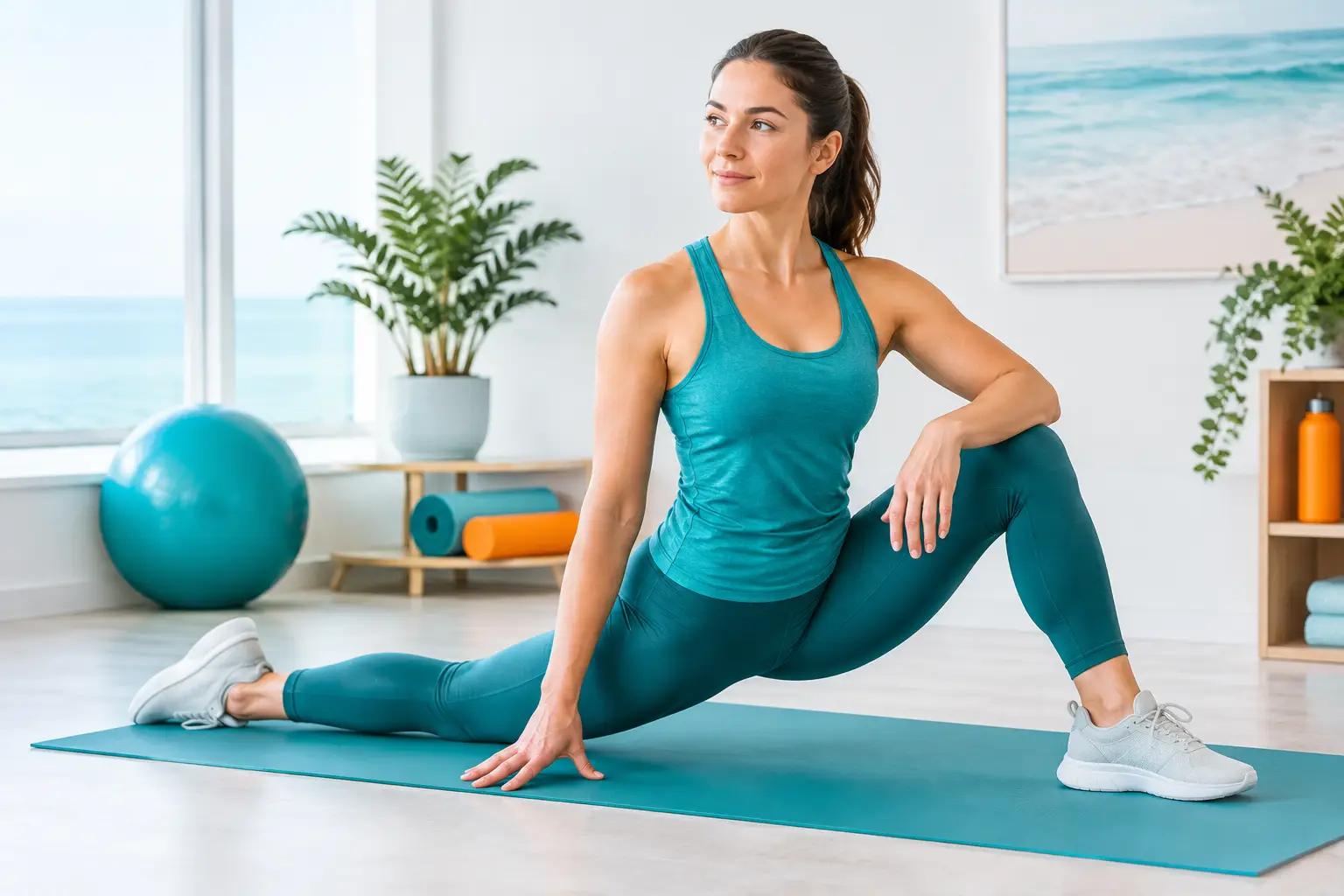
Hip stiffness has a way of showing up in ordinary moments: getting out of the car after a long commute, squatting to pick up a child, climbing the stairs after a beach walk, or trying to get comfortable in bed. Learning how to improve hip mobility is not about pushing your body into deep stretches. It is about restoring comfortable, controlled movement while understanding what may be limiting your hips in the first place.
The hips are built to move in several directions while supporting much of your body weight. When they feel restricted, the cause may involve the hip joint itself, surrounding muscles, your lower back, old injuries, training load, posture, or the way your nervous system is responding to pain and stress. A gentle, whole-body approach often creates more lasting change than simply stretching harder.
What hip mobility really means
Hip mobility is your ability to move the hip joint through its available range with control. This includes bringing your knee towards your chest, moving the leg behind you, rotating the thigh in and out, and moving the leg out to the side.
Flexibility is part of the picture, but it is not the same thing. You may be able to pull your knee towards your chest with your hands, for example, yet struggle to hold that position or move through it comfortably when walking, running or lunging. That is where strength, coordination and joint control matter.
It also depends on the person. A runner may need comfortable hip extension to stride efficiently, while someone who spends much of the day sitting may want enough movement to stand, squat and walk without stiffness. The goal is useful mobility for your body and your life, not copying someone else’s range of motion.
Common reasons hips become stiff
Long periods of sitting can leave the front of the hips feeling tight and the gluteal muscles less active. This is common for office workers, drivers and students, but sitting is rarely the only reason. Repeating the same sporting movements, suddenly increasing training, recovering from a knee or ankle injury, or avoiding movement because of pain can all change how the hips move.
The lower back and pelvis also influence hip comfort. When one area is not moving well, another area may work harder to compensate. For example, limited ankle movement may alter a squat, while poor trunk control can make the hip feel pinchy during lunges or running.
Stress can play a role too. When the nervous system is under pressure, muscles may stay guarded and pain can feel more intense. This does not mean the symptoms are “all in your head”. It means the body works as a connected system, and recovery is often better when sleep, workload, training and emotional wellbeing are considered alongside physical treatment.
How to improve hip mobility with daily movement
Consistency is more helpful than occasional, intense stretching. Start with five to 10 minutes of gentle movement most days, particularly after sitting for a while or before exercise. Stay in a comfortable range and aim for smooth movement rather than forcing an end position.
Begin by moving the joint
Try slow hip circles while standing and holding a bench or wall for balance. Lift one knee, gently guide it out to the side, move it behind you, then return to the starting position. Repeat in the other direction. This introduces movement through several hip ranges without placing too much load on the joint.
A supported deep squat hold can also be useful if it is comfortable for your knees and hips. Hold onto a stable surface, lower only as far as feels controlled, and take a few calm breaths. You may gently shift your weight from side to side rather than trying to sink lower.
For people who find floor work more comfortable, a 90/90 seated hip rotation is a practical option. Sit with both knees bent, allowing one leg to rest in front and the other to the side. Slowly rotate your knees from one side to the other, using your hands behind you for support. Keep the movement small at first if there is stiffness.
Add strength to the new range
Mobility tends to improve when your body feels strong and safe in the range you are asking it to use. Glute bridges, bodyweight squats to a chair, step-ups and controlled split squats can build useful hip strength without needing complicated equipment.
Focus on quality. In a bridge, press through both feet, gently tighten the buttocks and lift only as high as you can without arching through the lower back. In a squat, keep the movement comfortable and use a chair as a depth guide. Two or three short strength sessions each week can make a meaningful difference, especially when paired with regular walking.
If you play sport, mobility work should support your training rather than exhaust you before it. Dynamic movements are usually better before a run, gym session or game, while longer relaxed holds may feel good afterwards. If a stretch leaves you sore, unstable or more restricted the next day, reduce the intensity or choose another exercise.
Change positions through the day
No single posture is perfect for hours at a time. If you work at a desk, set a reminder to stand, walk to refill your water bottle, or do a few gentle hip movements every 30 to 60 minutes. A short break is often more realistic and more effective than promising yourself a lengthy session after a busy day.
When sitting, allow your feet to rest firmly on the floor and avoid staying twisted or crossed-legged for too long if it aggravates symptoms. Small changes in position can reduce the feeling of being locked up by the end of the day.
Stretching should feel relieving, not threatening
A stretch may create mild tension, but it should not cause sharp pain, numbness, tingling, catching or a deep pinch in the front of the hip. Those sensations are a sign to stop and seek individual advice rather than push through.
Hip flexor stretches can feel helpful after sitting, but avoid tipping the pelvis forward and overextending your lower back to create a bigger stretch. Instead, use a half-kneeling position, gently tuck your tailbone under, tighten the glute of the kneeling leg and shift forward slightly. You may feel a comfortable stretch at the front of that hip.
The same principle applies to glute stretches. A figure-four position can be useful, but only if the knee is supported and the hip feels comfortable. For some people, particularly after hip surgery, during pregnancy, or with certain joint conditions, standard stretches may not be appropriate. Personalised guidance matters.
When hip pain needs a closer look
Some stiffness responds well to gradual movement and strengthening. However, persistent pain deserves assessment, particularly if it affects sleep, walking or work. Book an appointment if you have pain after a fall, significant swelling, an inability to bear weight, a locking sensation, or pain that travels down the leg with numbness or weakness.
It is also worth seeking care when a hip problem keeps returning despite your best efforts. A practitioner can assess how your hips, pelvis, lower back, knees and ankles are moving together, identify contributing factors, and help you build a treatment and rehabilitation plan that fits your goals.
At Neurohealth Wellness, our chiropractors, massage therapists, myotherapists and acupuncturists take a whole-body view of hip discomfort and sports injuries. Hands-on care may be combined with tailored movement advice, soft tissue treatment, dry needling or other appropriate therapies to support pain relief, recovery and stronger movement over time.
Give your hips time to adapt
Improving hip mobility is rarely about finding one magic stretch. It is usually the result of regular movement, progressive strength, sensible training and the right support when pain is getting in the way. Start where your body is today, keep the effort manageable, and let comfortable movement become part of your everyday routine.


