


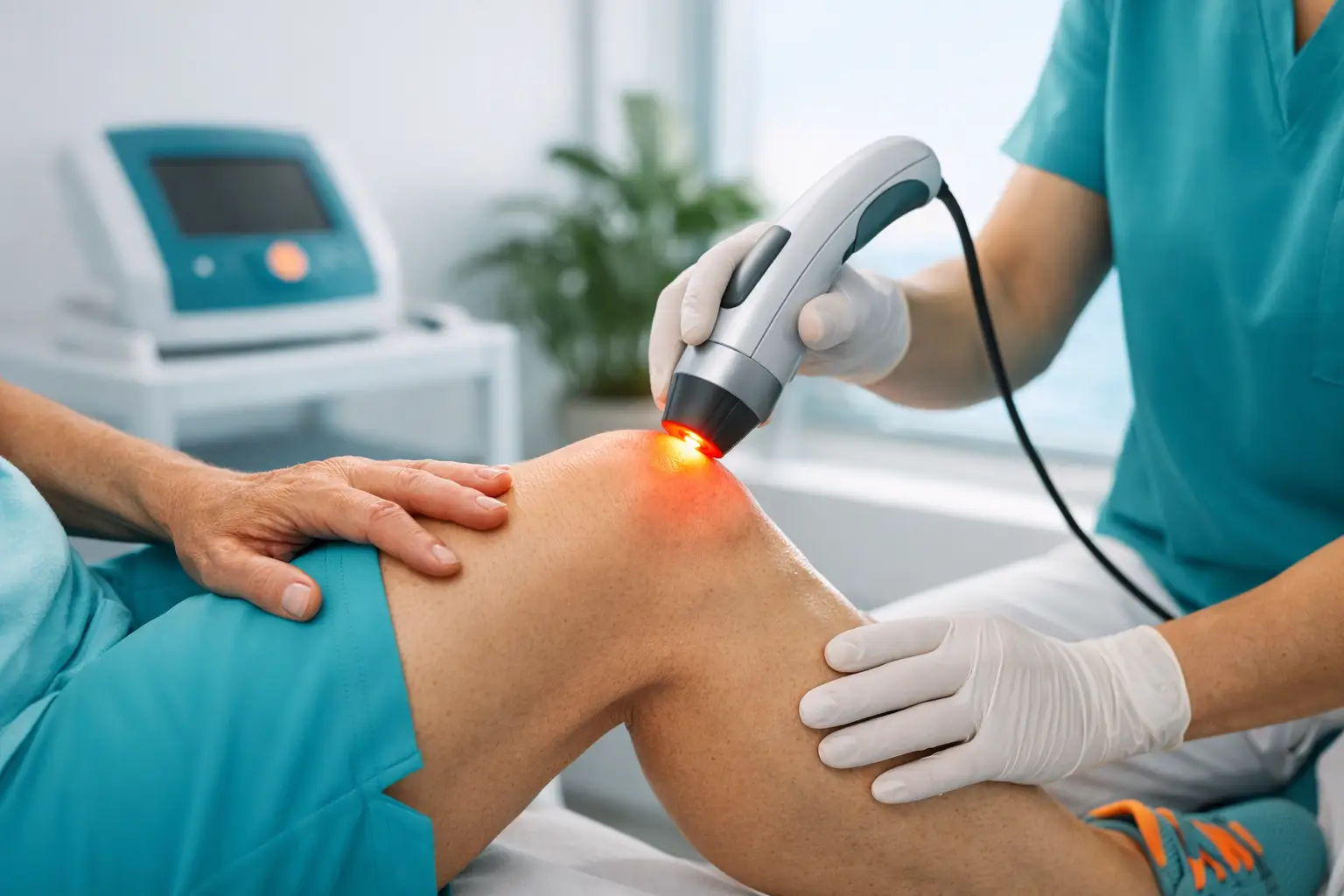
A knee that complains on the stairs, after a run, or when you stand from the couch can quickly change how you move through the day. Laser therapy for knee pain is a gentle, non-invasive treatment that may help reduce discomfort, support tissue healing and make movement feel easier, without medication or downtime.
At Neurohealth Wellness, we look beyond the sore spot. Knee pain can be influenced by training load, hip and ankle movement, muscle control, posture, previous injuries and the way your nervous system responds to pain. Laser therapy can be a valuable part of a personalised care plan, particularly when it is combined with hands-on treatment, movement rehabilitation and practical advice for your goals.
What is laser therapy for knee pain?
Therapeutic laser treatment, also called photobiomodulation or low-level laser therapy, uses specific wavelengths of light delivered to the affected area. The light is applied through a handheld device and is intended to influence cellular activity in the tissues beneath the skin.
Unlike surgical lasers, therapeutic laser does not cut or burn tissue. Most people feel little more than mild warmth during treatment, if they feel anything at all. A session is generally comfortable, quick and easy to fit into a busy week.
The aim is not to simply mask symptoms. Laser therapy may help calm inflammatory processes, support circulation and encourage the body’s repair response. For some people, this can mean less pain and stiffness, better tolerance for rehabilitation exercises, and greater confidence getting back to walking, training or everyday tasks.
When may laser therapy help knee pain?
Knee pain is a broad term, and the best approach depends on what is driving it. Laser therapy may be considered for acute sporting injuries as well as longer-term irritation, provided a practitioner has assessed the knee and your wider movement patterns.
It may be useful as part of care for tendon irritation around the knee, patellofemoral pain or pain around the kneecap, mild ligament or soft-tissue strains, muscle tightness affecting knee mechanics, and osteoarthritis-related stiffness or discomfort. Active adults may seek treatment after increasing their running, cycling or gym workload too quickly. Office workers can also develop knee symptoms when long periods of sitting are combined with reduced hip and ankle mobility.
For athletes, the goal is rarely just to settle pain before the next game. A more useful plan considers why the tissue became overloaded in the first place. This may include strength, landing mechanics, footwear, recovery, training volume and restrictions elsewhere in the body.
Laser therapy is not a one-size-fits-all solution. Some knee conditions need a different focus, and significant injuries may require imaging, medical review or referral. A thoughtful assessment helps determine whether laser is appropriate and how it can best support your recovery.
What happens during a treatment session?
Your practitioner will first ask about your symptoms, health history, daily activities and what you want to return to. They may assess how your knee bends and straightens, observe walking or squatting, and check the hips, ankles and surrounding muscles. This wider assessment matters because a painful knee does not always mean the knee is the only problem.
During laser treatment, protective eyewear is worn and the device is positioned over selected areas of the knee. The treatment itself is usually painless. Depending on your presentation, it may be paired with chiropractic care, remedial or therapeutic massage, myotherapy, dry needling, acupuncture or targeted rehabilitation guidance.
You can usually return to normal activities straight afterwards. Your practitioner may suggest modifying aggravating exercise for a short period, rather than stopping all movement. The right amount of activity often supports recovery better than complete rest, but the balance is individual.
How many sessions will you need?
There is no reliable single answer. A recent, mild flare-up may respond differently from knee pain that has been present for years or is linked with osteoarthritis. Your response can also be shaped by sleep, stress, workload, general health and whether you are able to follow a suitable rehabilitation plan.
Your practitioner will discuss a recommended course of care based on your condition and reassess your progress. Some people notice a change early, while others need several sessions before improvements in pain or movement are clear. The focus should be measurable progress, not endless treatment.
Why combine laser therapy with rehabilitation?
Pain relief is valuable, but lasting improvement often requires the knee to tolerate the demands of life again. If climbing stairs, carrying groceries, playing netball or getting through a full shift is painful, the body may begin to compensate. Over time, this can affect the hips, lower back, feet and confidence in movement.
Laser therapy can create a helpful window where pain is more manageable. Rehabilitation then uses that window to restore strength, mobility and control. For example, someone with kneecap pain may benefit from gradually building quadriceps and glute strength while improving ankle range and adjusting their running load. Someone recovering from a football injury may need a staged return to sprinting, cutting and kicking rather than an early return based only on reduced soreness.
This integrated approach also respects the role of the nervous system. Persistent pain can make the body more protective and sensitive, even after tissues have begun to heal. Gentle hands-on care, appropriate movement and clear reassurance can all be part of helping the system feel safer to move.
What the research and your experience can both tell us
Research into photobiomodulation for knee pain is promising, particularly for some musculoskeletal conditions, but results vary. Outcomes depend on the type of condition, the laser settings used, the dose, treatment frequency and what other care is included. It should not be presented as a cure for every knee problem.
The most meaningful question is whether treatment helps you make practical gains. Are you walking with less discomfort? Can you squat more comfortably, sleep better, train with greater confidence or reduce your reliance on avoiding movement? These changes matter more than a promise of instant relief.
A qualified practitioner can help set realistic expectations. Laser therapy may be one part of a well-considered plan, not a replacement for diagnosis, medical care where needed, or the gradual rebuilding of capacity.
When to seek medical assessment first
Book a prompt medical assessment if your knee is severely swollen, hot or red, visibly deformed, locked in place, unable to bear weight, or painful after a significant fall or collision. Sudden calf swelling, fever, unexplained illness, numbness or symptoms that are rapidly worsening also need medical attention.
If you have had knee surgery, a history of cancer, altered sensation in the area, or are pregnant, tell your practitioner before treatment so care can be tailored appropriately. Laser therapy is not suitable for every situation, and your safety comes first.
A gentler path back to confident movement
Knee pain does not have to mean giving up the activities that make you feel like yourself. With a clear assessment and personalised care, laser therapy may help settle symptoms while you work towards stronger, more comfortable movement. Whether your aim is a pain-free walk along the Northern Beaches, a return to sport, or simply getting up and down stairs with ease, starting with the right assessment can make the next step feel more manageable.


