


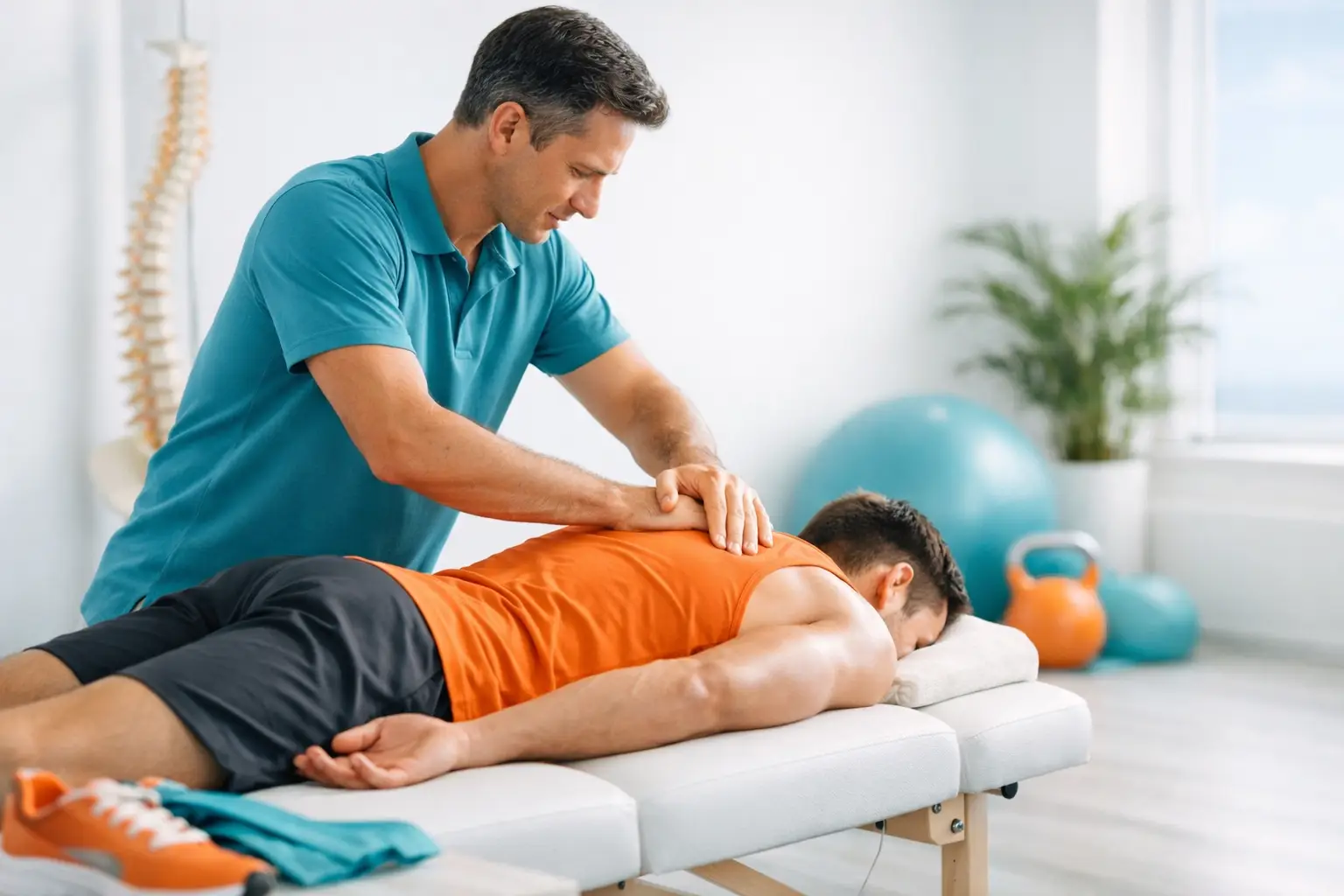
That ankle niggle that keeps returning after your weekend run, the shoulder that tightens every time you swim, the knee that never quite feels right after training - these issues rarely come from one sore spot alone. A good guide to sports chiropractic care starts with that idea. Sports injuries and performance limits often involve the way the whole body moves, recovers and adapts under load.
For active adults, recreational athletes and competitive sportspeople alike, chiropractic care can be a valuable part of both recovery and performance support. It is not just about easing pain in the moment. At its best, it helps improve joint function, movement quality, muscle balance and nervous system communication, so your body can handle training and daily life with more confidence.
What sports chiropractic care actually involves
Sports chiropractic care focuses on how the body performs under physical demand. That includes treating injuries, reducing strain, improving mobility and supporting better movement patterns. While many people associate chiropractic with the spine alone, sports-focused care often extends to shoulders, elbows, wrists, hips, knees, ankles and the surrounding muscles and connective tissues.
In practice, treatment is tailored to the sport, the injury history and the person in front of the practitioner. A runner with calf tightness and hip restriction needs a different approach from a tennis player with elbow pain or a gym-goer dealing with recurring low back strain. The aim is not to apply the same technique to everyone, but to understand why the problem is happening and what the body needs to move and recover more effectively.
That may include hands-on chiropractic adjustments, soft tissue work, mobility advice, rehabilitation exercises and guidance around training loads. In a multidisciplinary setting, it may also involve massage, myotherapy, dry needling or other supportive therapies where appropriate.
A practical guide to sports chiropractic care for active people
If you have never seen a sports chiropractor before, it helps to know what to expect. The first step is usually a detailed assessment, not a rushed treatment. Your practitioner should ask about your sport, training habits, injury history, work posture, stress levels and recovery patterns, because all of these can influence how your body performs.
They will also look at how you move. That might include checking joint range, muscle tension, balance, spinal and pelvic mechanics, and the way one area may be compensating for another. For example, recurring knee pain may be linked to hip control, ankle stiffness or altered loading patterns rather than the knee being the only issue.
From there, care is usually built around three goals: settling irritation, restoring function and helping prevent the same problem from returning. That balance matters. Pain relief is important, but if movement patterns and tissue loading are not addressed, symptoms can come back as soon as training intensity increases.
When sports chiropractic care can help
Sports chiropractic care can be useful for both new injuries and ongoing problems that have become part of training life. Many people seek help for sprains, strains, shoulder restrictions, runner’s knee, tennis or golfer’s elbow, hip tightness, lower back pain and post-training stiffness. Others come in because they are not injured, but know something feels off in their movement or recovery.
It can also be helpful during periods of increased physical demand. If you are preparing for an event, returning to sport after time off or trying to rebuild confidence after an injury, having support around mobility, body mechanics and rehabilitation can make that process feel more manageable.
That said, it depends on the issue. Not every injury is suitable for immediate manual treatment, and some cases require imaging, medical referral or a modified rehab approach first. Good care should always be based on what is safe and appropriate, not a one-size-fits-all plan.
Sports performance is more than pain relief
One of the most overlooked parts of sports chiropractic care is performance support. Many active people only book in once pain becomes hard to ignore, yet small restrictions in movement can affect efficiency long before they cause obvious symptoms.
If your thoracic spine is stiff, your shoulder mechanics may change. If your hips are not moving well, your lower back or knees may take extra strain. If your nervous system is under stress and recovery is poor, the body can stay tense and guarded even when training volume is reasonable. These patterns do not just affect comfort. They can affect power, coordination, endurance and confidence.
This is where an integrated, whole-body approach makes a real difference. Looking at how the joints move, how muscles are compensating and how the nervous system is responding can help identify barriers to better performance. For some people, that means moving more freely. For others, it means recovering faster between sessions or feeling more stable under load.
What treatment may include
Treatment plans vary depending on the injury, goals and stage of recovery. Chiropractic adjustments may be used to improve joint mobility and reduce mechanical restriction. Soft tissue techniques can help with tight, overworked muscles. Rehab exercises may be prescribed to rebuild control, strength and resilience in the areas that are not doing their share.
You may also receive advice around stretching, warm-ups, training modification and return-to-sport progression. This guidance matters just as much as hands-on care. If a shoulder is irritated from repeated overload, for example, treatment alone will not solve the problem if the body is going straight back into the same pattern without support.
At Neurohealth Wellness, sports injury care often works best when it is not treated in isolation. Some people benefit from combining chiropractic with remedial massage, myotherapy or other therapies to support tissue recovery and movement quality from multiple angles.
Why a whole-body approach matters
A sore wrist may start with the way you load your shoulder. Repeated calf strain may reflect poor foot mechanics, hip weakness or limited ankle mobility. Persistent neck tension may be influenced by stress, breathing patterns and long hours at a desk on top of training load. This is why sports care should not stop at the site of pain.
A whole-body approach looks at the physical issue, but also at the habits and pressures around it. Sleep, stress, recovery time, posture and workload all matter. That does not mean every problem is complicated, but it does mean better results often come from seeing the bigger picture.
For many patients, this feels reassuring. Instead of being told to simply rest or push through, they receive a personalised plan that makes sense of what their body is doing and why. That can be especially valuable for people who have had the same issue flare up more than once.
Choosing the right time to book
You do not need to wait until pain is severe. In fact, early care is often easier than dealing with a problem that has been brewing for months. If you notice recurring tightness, reduced range of motion, pain during or after activity, changes in technique, or a drop in confidence with movement, it is worth having it assessed.
There is also value in support during maintenance phases. Some active people use sports chiropractic care to stay ahead of trouble during heavy training blocks, while others book in as needed after flare-ups or competition. Neither approach is automatically right or wrong. It depends on your sport, injury history, goals and how your body responds to load.
The key is personalised care rather than fixed schedules. A thoughtful practitioner should explain what they are seeing, what they recommend and how that plan supports your sport and everyday function.
What to look for in a sports chiropractor
Experience with sports injuries matters, but so does communication. You want someone who listens, assesses properly and explains treatment in clear language. Good care should feel collaborative, not prescriptive.
It also helps to choose a clinic that understands rehabilitation, not just symptom relief. When hands-on treatment is combined with movement advice and practical recovery support, patients are often better equipped to stay active for the long term. For many people, access to complementary services under one roof can make that process simpler and more consistent.
If you are dealing with ankle pain, shoulder restriction, knee strain, elbow irritation, hip tightness or recurring back discomfort linked to training, the right care can do more than settle symptoms. It can help you move better, recover more confidently and return to the activities that make you feel like yourself.
The goal is not to chase perfect movement or never feel sore again. It is to give your body the support it needs to adapt well, perform well and stay in the game with greater ease.


