


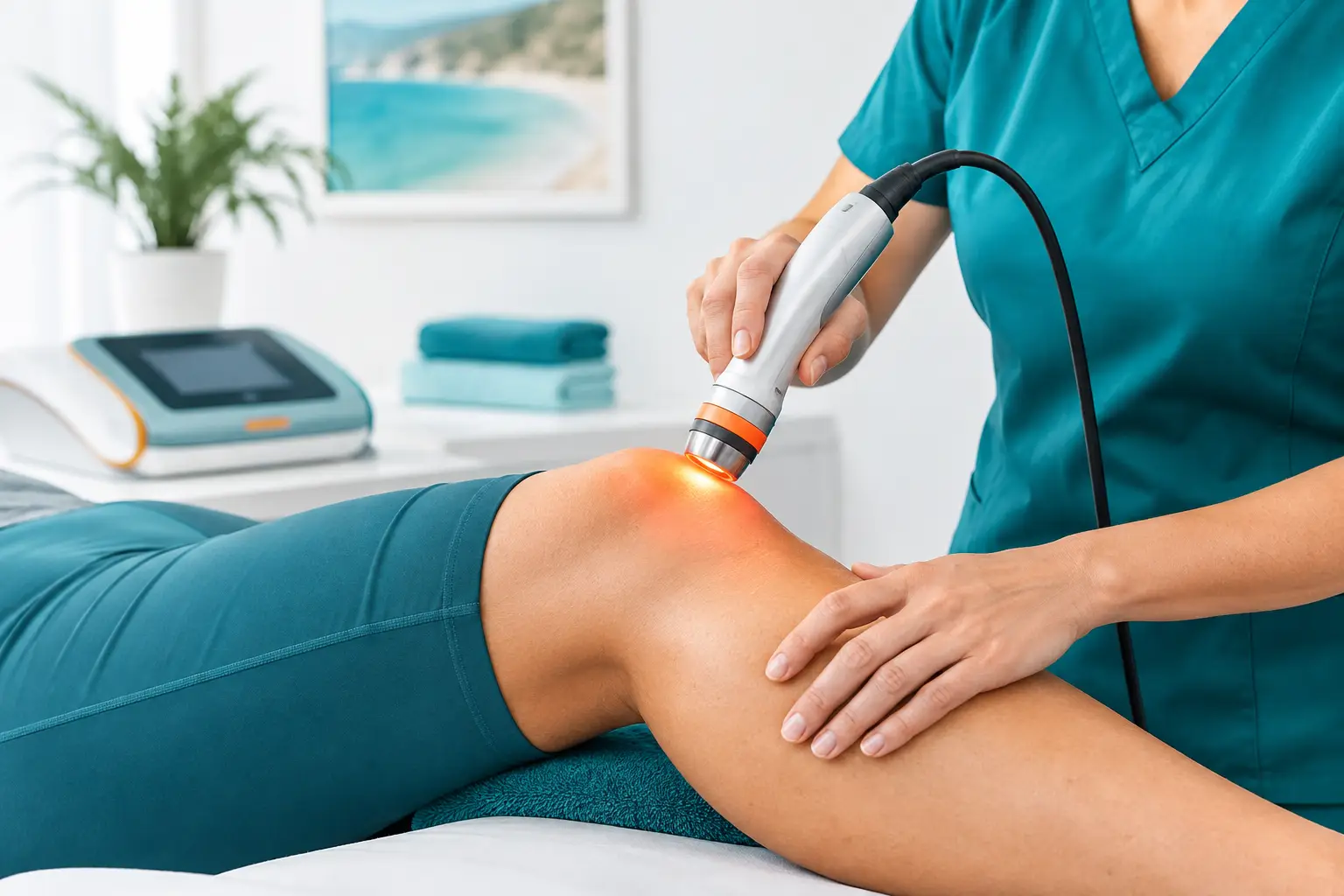
A sore Achilles after a long run, a shoulder that still catches weeks after a gym session, or a lingering ankle sprain can make everyday movement feel uncertain. Laser therapy for soft tissue injury is a gentle, non-invasive treatment that may help reduce pain and support the body’s recovery process, particularly when it is combined with a thoughtful rehabilitation plan.
At Neurohealth Wellness, we look beyond the painful spot alone. The way you move, train, recover, work and respond to stress can all influence how an injury settles. Laser therapy can be one useful part of care, alongside hands-on treatment, targeted exercise and practical guidance tailored to your goals.
What is laser therapy for soft tissue injury?
Therapeutic laser therapy, also known as low-level laser therapy or photobiomodulation, uses specific wavelengths of light delivered to the affected area. Unlike surgical lasers, therapeutic lasers do not cut, burn or damage tissue. Most people feel little more than gentle warmth, if anything, during a session.
The light energy is absorbed by cells in the tissues. This is intended to support cellular activity and circulation, helping the body manage inflammation and repair processes more effectively. Research into laser therapy is continuing, and results can vary depending on the condition, the device used, treatment settings and the person receiving care. It is best viewed as a supportive therapy rather than a stand-alone fix.
Soft tissues include muscles, tendons, ligaments, fascia and other connective tissues. These structures can be irritated by a single awkward movement, a fall, repetitive loading at work, poor recovery between training sessions, or a gradual build-up in activity that exceeds the body’s current capacity.
When may laser therapy be helpful?
Laser therapy may be considered for recent injuries and longer-standing pain where soft tissue irritation is contributing to reduced movement or discomfort. It is commonly used as part of sports injury care, but you do not need to be an athlete to benefit from a well-planned approach.
A practitioner may consider laser therapy for concerns such as tendon pain around the elbow, knee or heel; muscle strains; ankle sprains; shoulder discomfort; hip or wrist pain; plantar fascia irritation; and persistent tightness following an injury. It may also be useful where pain is making it difficult to begin the movement and strengthening work needed for a fuller recovery.
The timing matters. In the first days after a significant injury, the priority may be protecting the area, assessing the extent of damage and ensuring there is no fracture, complete tendon rupture or other condition requiring medical attention. Once a clear plan is in place, laser therapy may help support the next stage of recovery.
What does a treatment session involve?
Your first visit should begin with a proper assessment, not simply applying a device where it hurts. Your practitioner will ask how the injury happened, what movements aggravate it, how it affects work, sport and sleep, and whether there are previous injuries that may be changing your movement patterns.
They will assess the relevant area and, where appropriate, look at nearby joints and muscles. For example, recurring knee pain may be influenced by hip strength, ankle mobility, training volume or footwear. Shoulder pain can be affected by the neck, upper back posture, work set-up and how the shoulder blade moves.
During laser treatment, protective eyewear is used and the laser applicator is held over selected points or moved across the affected tissue. Sessions are generally comfortable and relatively quick. Depending on your presentation, treatment may be combined with remedial massage, myotherapy, chiropractic care, dry needling, acupuncture or rehabilitation exercises.
You may notice an improvement in comfort or movement after a session, while others experience more gradual change across several appointments. This depends on the injury, how long it has been present, the amount of tissue irritation and the demands you are placing on your body between treatments.
Why a combined approach often works better
Pain relief is valuable, but it is not the same as restored capacity. If a tendon becomes less painful after treatment but is returned immediately to the same training load that aggravated it, symptoms can return. The aim is to help you move forward with more confidence while addressing the reasons the tissue became overloaded in the first place.
For an active person, this may mean adjusting running distances, changing gym exercises temporarily, improving warm-up habits and building strength progressively. For an office worker, it may involve improving desk ergonomics, taking regular movement breaks and restoring mobility through the neck, upper back, hips or wrists. For a parent carrying children, it may mean finding more comfortable lifting strategies while strengthening the areas under repeated strain.
This whole-body perspective is particularly useful for sports performance. A calf strain, for instance, may be linked to reduced ankle movement, fatigue, inadequate recovery or changes in training intensity. Treating the sore calf can be helpful, but the longer-term plan should also prepare you to run, jump, change direction or play your sport without repeatedly breaking down.
What laser therapy can and cannot do
Laser therapy may help settle symptoms and support tissue recovery, but it cannot replace appropriate diagnosis, sensible load management or rehabilitation. A torn ligament, fracture, serious infection or progressive nerve symptoms needs timely medical assessment. Severe swelling, deformity, inability to bear weight, numbness, sudden weakness or pain following significant trauma are reasons to seek urgent medical advice.
It also does not mean you should push through pain because the area feels temporarily better. Recovery is usually more successful when treatment is matched with gradual, purposeful exposure to movement. Your practitioner can help distinguish between manageable rehabilitation discomfort and signs that you are doing too much too soon.
The evidence for laser therapy is more promising for some musculoskeletal conditions than others. Treatment settings matter, and there is no single protocol that suits every shoulder, knee or tendon problem. An experienced practitioner should be clear about the expected role of treatment, monitor your response and adjust the plan if progress is not occurring.
Is laser therapy safe for everyone?
Therapeutic laser is generally considered a low-risk treatment when used by a trained practitioner, but it is not appropriate in every situation. Your health history matters. Tell your practitioner about pregnancy, cancer or a history of cancer, medications that increase light sensitivity, active infection, recent procedures and any new or unexplained symptoms.
Laser is not directed into the eyes, and protective eyewear is essential during treatment. If you are pregnant, care is always individualised, with treatment choices made conservatively and in line with your presentation. A comprehensive assessment helps ensure that laser therapy is appropriate for you and that other options are considered where needed.
Supporting your recovery between appointments
The most useful thing you can do after treatment is follow the plan that fits your injury and lifestyle. That may involve relative rest rather than complete rest, gentle mobility work, specific strengthening exercises, enough sleep and adequate recovery around sport. Small, consistent changes are usually more effective than one perfect session followed by a week of doing too much.
Pay attention to how symptoms respond over the following 24 hours. A mild and short-lived increase in awareness after new exercises can happen, but worsening pain, swelling or loss of function should be discussed with your practitioner. This feedback allows your plan to be progressed at the right pace.
If an injury is stopping you from doing the things you enjoy, a personalised assessment can provide clarity and a practical path forward. The goal is not simply to quieten pain for a day, but to help your body regain the movement, strength and confidence it needs for everyday life, work and sport.


