


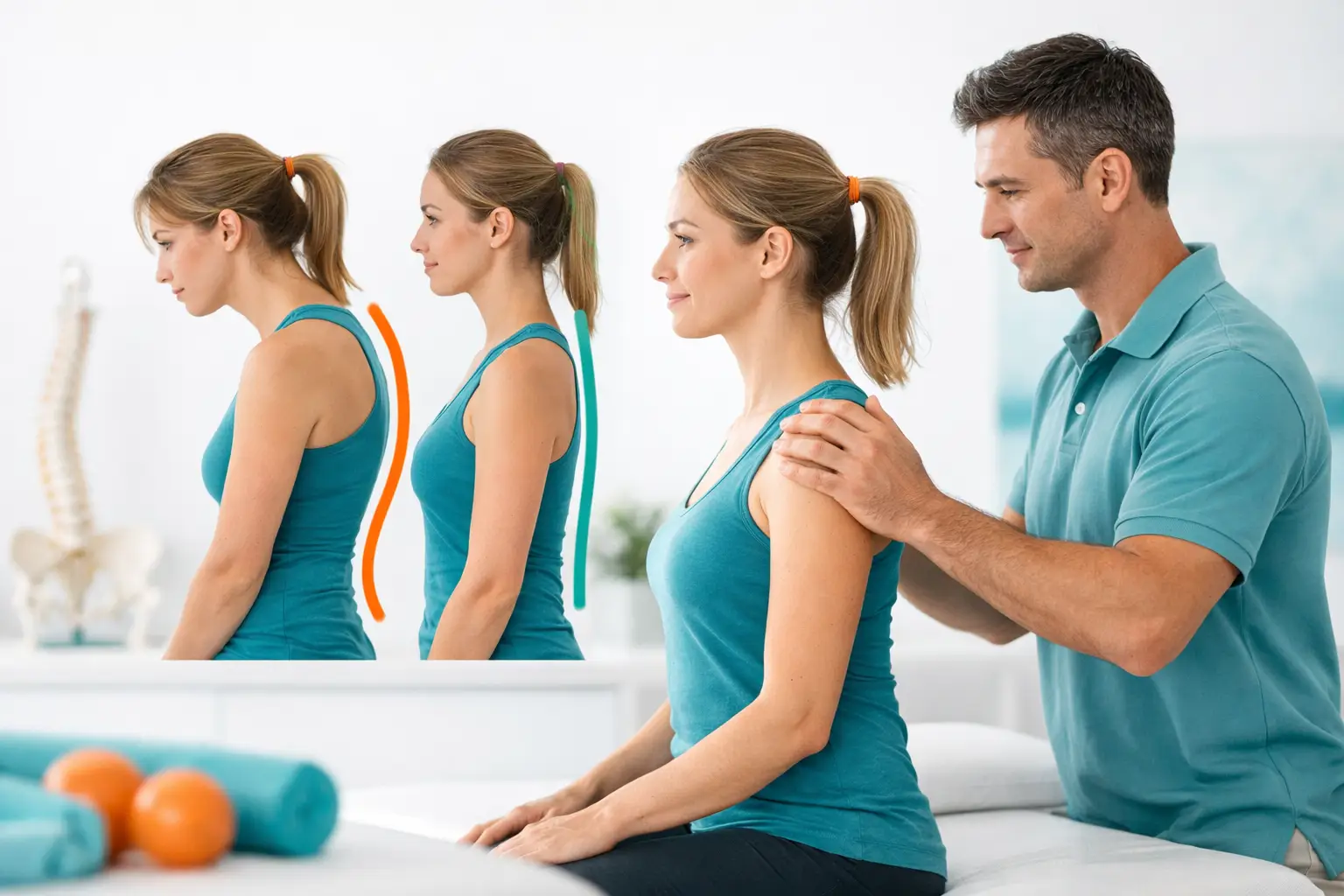
You usually notice posture when something starts to hurt. It might be the stiff neck after a day at the desk, the low back that tightens on the drive home, or the shoulder tension that keeps returning no matter how often you stretch. Posture correction treatment is not about forcing yourself to sit bolt upright all day. It is about understanding why your body is under strain, then helping it move and function with less effort.
For some people, posture issues build slowly through work, stress and daily habits. For others, they show up after pregnancy, a sports injury, a growth spurt, or long periods of reduced movement. The common thread is that posture is rarely just a matter of willpower. It reflects how your muscles, joints, nervous system and movement patterns are working together.
What posture correction treatment really means
A good posture correction treatment plan looks beyond appearance. Standing straighter can be a nice side effect, but the real goal is better function. That means less pressure on overloaded areas, improved mobility, more balanced muscle activity and a body that can cope better with daily life.
Posture is dynamic, not fixed. Your body should be able to sit, stand, bend, lift, walk and train without one area doing all the work. If your upper back is stiff, your neck may compensate. If your hips are restricted, your lower back may take more load than it should. That is why quick fixes often fail. The visible posture pattern is only part of the picture.
In a clinical setting, posture correction treatment may include hands-on care, movement advice, rehabilitation exercises and strategies to reduce the triggers that keep the problem going. It can also involve looking at stress, sleep and recovery, because a tense nervous system often shows up in the body as guarded posture, shallow breathing and persistent muscle tightness.
Why posture problems are not always caused by bad habits
People often blame themselves for slouching, but posture is more layered than that. Yes, your workstation, phone use and driving habits can contribute. So can repetitive lifting, carrying children, favouring one side during sport, or training hard without enough recovery. But pain and posture changes can also be linked to old injuries, muscle weakness, joint restriction and stress.
That matters because the right treatment depends on the driver. A desk worker with rounded shoulders may need thoracic mobility work, muscle release and a better desk set-up. A runner with poor pelvic control may need glute strength and hip stability. A new mum may need a very different approach again, focused on feeding positions, lifting patterns and gentle rebuilding after pregnancy.
This is where personalised care makes a real difference. Treating everyone with the same stretches and generic posture tips can miss the root cause.
Signs you may benefit from posture correction treatment
Pain is the obvious one, but it is not the only sign. Many people seek help because they feel constantly tight, uneven or fatigued. You may notice headaches that build through the day, recurring neck and shoulder tension, low back stiffness, restricted breathing, or reduced performance in the gym or on the field.
Poor posture can also show up as frequent niggles that never fully settle. If you are repeatedly managing the same sore shoulder, irritated hip, tight calves or upper back ache, the way your body is loading and compensating may be part of the issue. Athletes often see this as a performance problem before it becomes a pain problem - reduced power, poor recovery, or movement that feels off.
Posture correction treatment options
Chiropractic care and joint mobility
When joints are stiff or not moving well, nearby muscles often work harder to protect the area. Chiropractic care can help restore movement in the spine and other joints, reduce tension and improve how the body distributes load. For many patients, this creates a useful starting point because movement becomes easier and exercises feel more effective.
That said, manual care works best as part of a broader plan. If the body returns to the same strain patterns every day, symptom relief may not hold for long.
Remedial massage, myotherapy and soft tissue work
Tight muscles can pull the body into uncomfortable positions, but they can also be reacting to instability somewhere else. Remedial massage and myotherapy can help reduce tension, improve circulation and ease restricted soft tissue that is contributing to postural strain. This is often helpful for desk workers, tradies, active adults and anyone carrying long-term stress through the neck, shoulders and back.
Soft tissue care can also support sports injury rehabilitation, especially where posture has adapted around a shoulder, knee, hip or ankle issue.
Acupuncture for tension and nervous system support
Acupuncture may be useful when posture is linked with persistent muscle tension, stress or pain that is not settling. Some people hold tension everywhere without realising it. Their shoulders stay elevated, their breathing becomes shallow and their body never fully switches out of protection mode. In these cases, calming the nervous system can be just as important as improving biomechanics.
Rehabilitation and movement retraining
This is often the missing piece in posture correction treatment. Lasting change usually requires your body to learn a better way of moving and stabilising. That might involve strengthening the deep neck flexors, improving shoulder blade control, building glute strength, restoring core support or retraining balance and coordination.
The exercises need to match your life. An office worker, surfer, golfer and pregnant woman will not all need the same program. The most effective rehab is practical enough to stick with and specific enough to address the problem.
Why a whole-body assessment matters
Posture is not just about where your head sits or whether your shoulders round forward. It is connected to the feet, knees, hips, spine, breathing pattern and even stress response. A whole-body assessment looks at how these areas interact instead of treating one sore spot in isolation.
For example, someone with recurring neck pain may actually have restricted upper back movement and poor rib mobility. Someone with lower back strain may have limited hip extension and weak glute control. Someone returning from an ankle injury may have shifted their whole standing pattern to compensate. If you only treat the painful area, you can miss what is feeding it.
An integrated clinic approach can be especially helpful here. When different therapies work together, treatment can be tailored more precisely to what your body needs at that stage - relief, mobility, strength, recovery, or a mix of all four.
What to expect from posture correction treatment
The first step is usually a conversation about your symptoms, work, activity levels, stress load and health history. From there, a practitioner may assess your posture, movement, joint mobility, muscle tension and areas of weakness or compensation. The goal is to understand not just what looks out of balance, but why.
Treatment often starts by reducing the strain that is making movement difficult. That may involve hands-on therapy to relieve tension and improve joint mobility. Once your body is moving more freely, simple home exercises and practical changes can help reinforce the improvement.
Progress is rarely perfectly linear. Some people feel relief quickly but need strengthening work to make it last. Others need a slower approach because the issue has built up over years or is mixed with stress, fatigue or an old injury. The right pace depends on your goals, your body and what you can realistically maintain.
When posture care is especially helpful
Posture correction treatment can be valuable for office workers spending long hours at a screen, active adults wanting to move better, and athletes trying to reduce compensations that affect performance. It can also be helpful during pregnancy and postpartum, when the body is adapting to significant physical change.
Families often seek support for teenagers as well, especially during periods of rapid growth, sport participation or heavy study loads. The focus should always be on comfortable, functional movement rather than chasing a perfect posture standard.
If posture issues are tied to a sports injury, rehabilitation becomes even more important. Returning to training without addressing compensations can place extra stress on nearby joints and tissues. A sore knee may change hip control. A shoulder problem may alter the spine and neck. These links matter.
At Neurohealth Wellness, this kind of care is approached with the bigger picture in mind - combining hands-on treatment, movement support and personalised guidance so patients can feel better and move with more confidence.
There is no single ideal posture that suits every body, every job or every stage of life. What matters more is whether your body can adapt, recover and move without constant strain. If your posture is starting to show up as pain, stiffness or reduced performance, it may be time to look beyond reminders to sit up straight and get the right support for the cause.


