


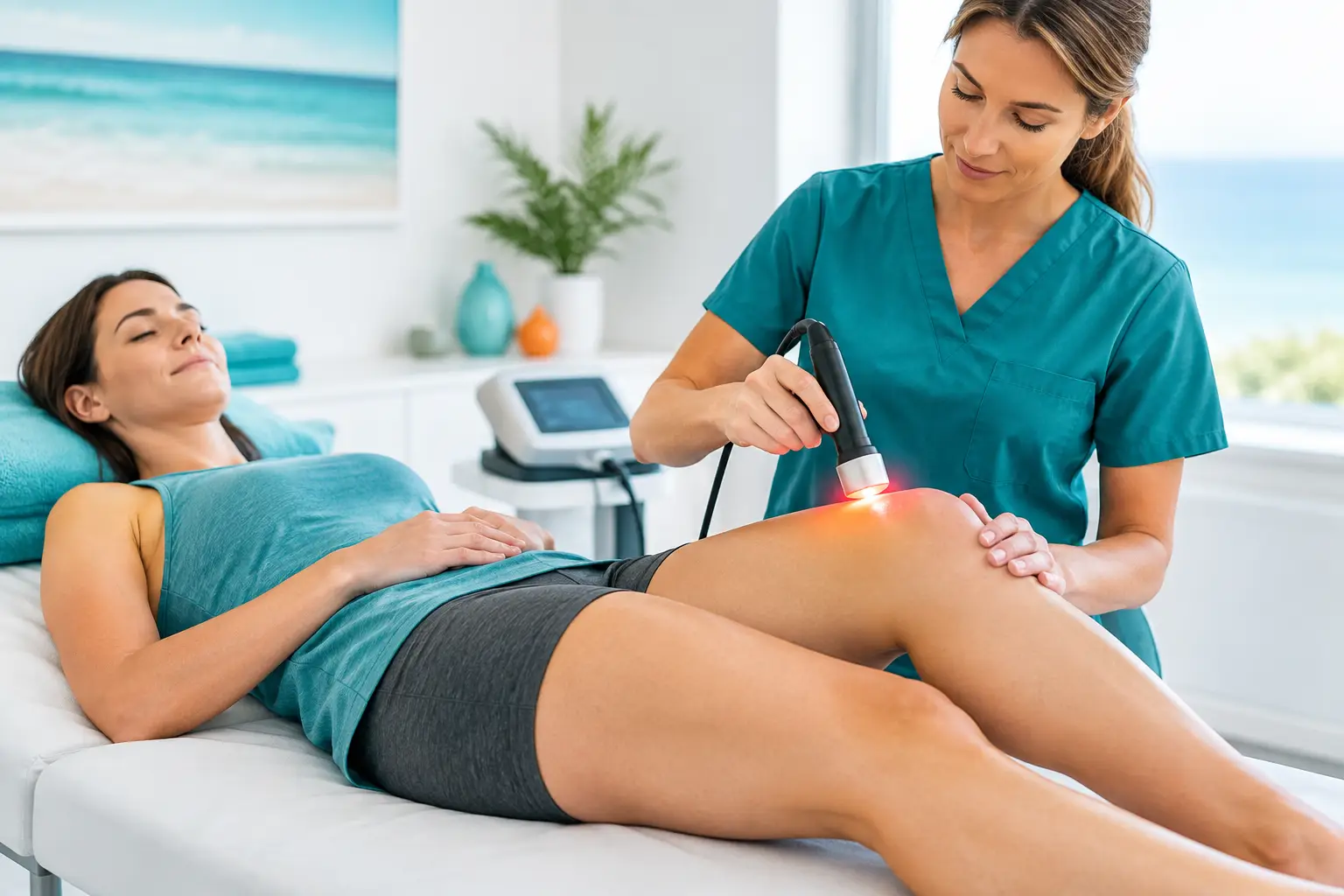
Laser therapy appointments are often quick and comfortable, which can make people wonder what they should do afterwards. This guide to laser therapy recovery explains how to support your body between sessions, what responses can be normal, and why your recovery plan should reflect the injury, your activity level and your overall health.
At Neurohealth Wellness, laser therapy may be used as part of a personalised care plan for pain, soft-tissue injuries, mobility concerns and sports recovery. It is not a one-size-fits-all treatment. The best results usually come from combining the right therapy with sensible movement, rehabilitation and professional guidance.
What laser therapy recovery actually means
Laser therapy, sometimes called low-level laser therapy or photobiomodulation, uses specific wavelengths of light to support the body’s natural healing processes. Depending on your presentation and treatment plan, it may be used to help manage pain, calm irritated tissue and support recovery after an injury.
Unlike a procedure that creates a wound or requires downtime, laser therapy is generally non-invasive. There is usually no lengthy “recovery from the treatment” itself. Instead, laser therapy recovery is about giving the affected area the best possible conditions to settle and rebuild between appointments.
For someone with a sore shoulder from swimming, that may mean temporarily adjusting training volume while restoring strength and movement. For an office worker with a persistent elbow or neck complaint, it may involve improving workstation habits, taking movement breaks and addressing the postural or muscular factors contributing to the problem. Your practitioner will consider the cause of your symptoms, not only where you feel them.
What you may feel after a session
Many people return to their usual daily activities straight after laser therapy. The area may feel the same, looser or more comfortable, and changes can be gradual rather than immediate. Some people notice mild, short-lived tenderness or a change in sensation as the tissues respond, particularly when the area was already sensitive.
Relief after one session can be encouraging, but it does not always mean the injury is fully resolved. Equally, not feeling a dramatic change immediately does not mean treatment has not been worthwhile. Recovery can depend on the nature of the condition, how long it has been present, your workload or sport, sleep, stress and whether the area is repeatedly irritated.
If you experience increasing pain, unusual swelling, skin changes, numbness, weakness or any reaction that worries you, contact your treating practitioner for advice. Seek urgent medical care for severe symptoms, sudden loss of function, chest pain, trouble breathing or signs of a serious injury.
Supporting recovery between laser therapy sessions
The practical steps after laser therapy should be simple enough to follow in real life. A care plan that fits around school drop-offs, desk work, surf sessions or training is more likely to help than an overly restrictive routine.
Keep gently moving, within your plan
Complete rest is not always the answer for aches and injuries. In many cases, gentle, comfortable movement helps maintain circulation, confidence and joint mobility. Your practitioner may recommend specific exercises, walking, modified gym work or a gradual return to running, depending on the body part involved.
The key is dosage. Pushing through sharp pain, dramatically increasing your training load or returning to sport before you can meet the demands of your activity can prolong symptoms. On the other hand, avoiding all movement for too long can lead to stiffness and reduced capacity. Aim for activity that feels manageable during and after, and follow the progression set out for you.
Use heat, ice and medication thoughtfully
There is no universal rule that everyone needs heat or ice after laser therapy. Ice can be useful for some acute injuries with pain or swelling, while gentle warmth may feel more comfortable for muscular tightness or stiffness. The right choice depends on what is going on in the tissue and how you respond.
Ask your practitioner what is appropriate for your condition rather than relying on generic advice online. If you use pain relief or anti-inflammatory medication, take it only as directed by your doctor or pharmacist, and let your practitioner know. It helps your care team understand the full picture of your symptoms and recovery.
Prioritise sleep, food and hydration
Your body does much of its repair work when you are resting. A few nights of poor sleep can increase pain sensitivity, reduce energy for rehabilitation and make it harder to stay consistent with healthy routines. Create a wind-down routine where possible, reduce screen time before bed and choose a sleep position that does not aggravate the affected area.
Regular meals with enough protein, colourful fruit and vegetables, whole grains and healthy fats support general wellbeing and tissue repair. Staying hydrated is also worthwhile, especially in the warmer months or when you are active. These habits will not replace treatment, but they can make a meaningful difference to how well your body copes with recovery.
Follow the rehabilitation plan, not just the symptom level
When pain settles, it is tempting to stop exercises or go straight back to your previous routine. Yet pain reduction and full capacity are not always the same thing. A knee may feel better on the stairs but still need strength work before you return to football, trail running or a demanding lower-body gym session.
Rehabilitation helps build the mobility, control and strength needed for the activity you want to return to. For sports injuries involving the ankle, shoulder, hip, elbow, wrist or knee, this progression is particularly valuable. It supports performance as well as recovery and may reduce the chance of the same issue returning when training load increases.
A guide to laser therapy recovery for active people
If you are an athlete or regularly exercise, the hardest part of recovery is often adjusting expectations. You may be able to keep training, but the type, intensity and volume may need to change for a period. That is not lost progress. It is a strategic way to maintain fitness without continually aggravating the injury.
For example, a runner with an irritated Achilles tendon may be advised to reduce hills or speed work while focusing on calf capacity and lower-impact conditioning. A tennis player with elbow pain may need to modify serving volume while addressing grip, shoulder control and forearm loading. The plan should be individual, because the same diagnosis can affect two people very differently.
Keep your practitioner updated about what happens after work, exercise and sleep. A useful pattern to notice is whether symptoms settle within 24 hours of activity or remain elevated and affect the next day. This information helps guide progressions more accurately than trying to simply “tough it out”.
When to review your treatment plan
Recovery should feel like a direction, not a perfectly straight line. Small fluctuations can happen, particularly with longstanding pain, physically demanding work, stress or a return to sport. However, your plan should be reviewed if symptoms are worsening, if daily activities are becoming harder, or if you are not seeing the expected change over the timeframe discussed with your practitioner.
A multidisciplinary approach can be helpful when recovery has more than one contributing factor. Hands-on care, remedial or therapeutic massage, acupuncture, myotherapy, chiropractic care and exercise guidance may each have a place, depending on your needs. Stress, sleep and nervous system load can also influence pain and muscle tension, so whole-body support matters.
Bring questions to each appointment. Tell your practitioner what has improved, what still feels limited and what you need to be able to do - whether that is lifting your child, sitting comfortably at work, returning to the ocean or competing at your best. Clear goals make care more personal and practical.
Give your body the time and consistency it needs. With a considered plan, supportive habits and the right guidance, each small improvement can become a more confident return to the activities that make you feel like yourself.


