


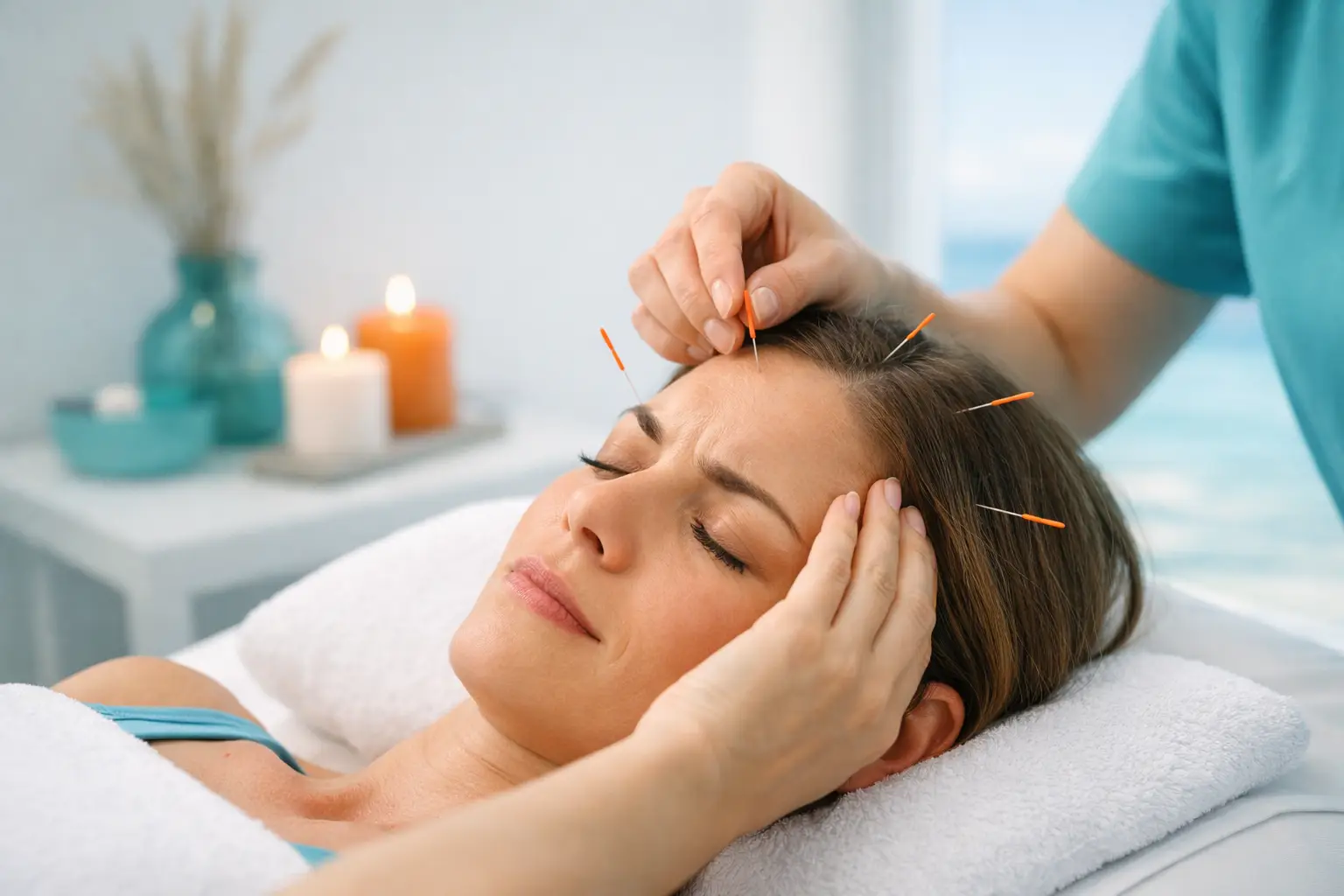
A migraine can flatten a whole day in a matter of minutes. For some people it starts with a dull warning behind the eyes. For others it arrives as throbbing pain, nausea, light sensitivity, neck tension, or the feeling that even basic tasks are suddenly too much. If you have been asking, does acupuncture help migraine symptoms, the short answer is that it can for some people, but the real answer depends on the pattern behind your migraines, how often they occur, and what else is contributing to them.
That is where a more individual approach matters. Migraines are rarely just about the head. Sleep, stress, posture, muscle tension, hormones, recovery, and nervous system overload can all play a role. Acupuncture is often considered because it offers a natural, low-drug option that aims to calm the system rather than simply mask discomfort.
Does acupuncture help migraine symptoms for everyone?
Not everyone responds in the same way, and it is best to be honest about that from the outset. Some people notice fewer migraine days, lower intensity, or shorter episodes after a course of acupuncture. Others find the main benefit is less neck and shoulder tension, improved sleep, or feeling less wound up, which can still be meaningful if stress is one of their triggers.
There are also people who try acupuncture and do not get the result they hoped for. That does not always mean the treatment was wrong. It may mean the migraine picture is more complex, the treatment plan needs more time, or another driver such as hormonal change, jaw tension, posture, or medication use is involved.
The strongest results tend to come when treatment is tailored rather than generic. A person getting migraines around their menstrual cycle may need a different approach from a surfer with persistent neck tightness, or an office worker whose attacks build after long hours at a desk.
What the evidence says
Research on acupuncture for migraine is encouraging, particularly for prevention. Studies have found that some people experience fewer migraine days and rely less on medication after a course of treatment. In some cases, acupuncture has performed similarly to preventive medication, with fewer unwanted side effects.
That said, research results are not perfectly uniform. Different studies use different treatment schedules, point selections, and patient groups. Some focus on chronic migraine, others on episodic migraine. This makes broad claims less useful than careful interpretation.
From a practical point of view, the takeaway is this: acupuncture is not a guaranteed fix, but it is a reasonable option for many people who want a complementary approach, especially if migraines are recurring and they are looking for support beyond short-term symptom control.
How acupuncture may help migraine symptoms
Migraine is a neurological condition, but it often interacts with the rest of the body in very obvious ways. Tight upper trapezius muscles, a stiff neck, poor sleep, heightened stress, and hormonal shifts can all turn the volume up. Acupuncture is commonly used to support the body on several levels at once.
One possible benefit is nervous system regulation. Many people with frequent migraines feel as if their body is constantly on alert. Acupuncture may help settle that heightened state and encourage a shift away from ongoing stress activation.
It can also be useful for muscular tension. If you carry stress in your neck, jaw, or shoulders, that tension may not be the sole cause of migraine, but it can be part of the pattern. Releasing those areas may reduce one source of irritation and make attacks less likely or less intense.
Blood flow and pain modulation are also part of the conversation. Acupuncture appears to influence the body’s natural pain-relieving processes, which may help explain why some people feel a gradual reduction in frequency or severity over time.
When acupuncture may be worth considering
Acupuncture may be worth exploring if you get regular migraines, if medication is not giving you enough relief, or if you want a more holistic plan that includes prevention rather than waiting for the next attack. It can also be helpful for people whose migraines appear linked to stress, sleep disruption, neck pain, menstrual cycles, or workload.
For active adults and athletes, there is another angle. Migraine symptoms sometimes sit alongside training load, dehydration, muscle tightness, poor recovery, or upper back restriction. In those cases, treatment works best when the whole picture is assessed, not just the headache itself.
Pregnant women may also ask about acupuncture because medication options can be more limited during pregnancy. In those situations, individual assessment is especially important so care is safe, appropriate, and coordinated with the broader health picture.
What a proper assessment should look at
A good migraine assessment should go beyond where the pain is. It should look at when migraines started, how often they happen, whether there is aura, what the pain feels like, and what seems to trigger or ease it. It should also consider sleep, stress, digestion, hormones, hydration, neck movement, posture, exercise habits, and workload.
This is one reason multidisciplinary care can be so valuable. If migraines are being fed by more than one factor, a single treatment style may not be enough. Some people benefit from acupuncture alongside remedial massage, myotherapy, or chiropractic care if muscle tension, spinal stiffness, or postural strain are clearly part of the problem. Others may need support around stress management, recovery, or lifestyle habits.
At Neurohealth Wellness, that whole-body thinking is central to care. The aim is not to chase symptoms in isolation, but to understand what is keeping the body under strain and create a treatment plan that makes sense for the individual.
What treatment usually involves
Acupuncture for migraine is usually done as a course of care rather than a one-off appointment. The exact number of sessions varies, but it is common for treatment to be closer together at first and then spaced out as symptoms settle.
During a session, fine needles are placed at selected points based on your presentation. Some points may be near the head or neck, while others may be on the arms, legs, or elsewhere on the body. Most people find the treatment more relaxing than expected. You may feel a dull ache, warmth, tingling, or heaviness around a point, but it should not feel aggressive.
Progress is not always linear. Some people improve quickly. Others notice small shifts first, such as better sleep, less tension, or longer gaps between attacks. Those changes matter, because they often show the system is becoming less reactive.
Does acupuncture help migraine symptoms better than medication?
This is not really an either-or question. For some people, acupuncture sits well alongside medical care. It may reduce reliance on medication, improve quality of life, or support prevention. For others, medication remains an essential part of management, particularly if migraines are severe, disabling, or unpredictable.
The best approach is usually the one that is safe, sustainable, and realistic for your life. If you are using medication, stopping or changing it should always be discussed with your GP or specialist. Complementary care works best when it complements, rather than competes with, appropriate medical guidance.
When to seek further medical advice
Not every severe headache is a migraine, and not every migraine should be self-managed. If you have a sudden, intense headache unlike anything you have had before, neurological symptoms that are new or worsening, fainting, confusion, fever, or symptoms after a head injury, urgent medical assessment is important.
It is also wise to seek medical advice if your migraine pattern has changed, if attacks are becoming more frequent, or if you are relying on pain relief very often. A proper diagnosis matters, and good complementary care should sit alongside that, not replace it.
The honest answer
So, does acupuncture help migraine symptoms? For many people, yes, it may help reduce frequency, ease intensity, calm associated tension, and support the body in a more preventative way. But results vary, and the best outcomes usually come from personalised care that looks at the full picture rather than treating migraine as an isolated event.
If your migraines seem tied to stress, neck tension, recovery, hormones, or a nervous system that never quite switches off, acupuncture may be a worthwhile part of your care plan. A thoughtful assessment can help you work out whether it is the right fit, and what combination of support is most likely to help you get more good days back.


