


That sharp first step out of bed can tell you a lot. If your heel feels tender, tight or painfully bruised before it loosens a little, plantar fasciitis is often the reason. For many people, laser therapy for plantar fasciitis becomes an option when stretching, rest and supportive footwear have helped only part of the way, or when the pain keeps returning.
Plantar fasciitis is one of the most common causes of heel pain, but that does not make it simple. The plantar fascia is a thick band of tissue that runs along the bottom of the foot and helps support the arch. When it becomes irritated or overloaded, everyday movements like walking the dog, standing at work, training, or chasing after kids can become surprisingly uncomfortable.
At a clinic level, we rarely look at foot pain in isolation. Heel pain often reflects a broader pattern involving load, movement, recovery, footwear, calf tension, training habits and sometimes the way the body is compensating higher up through the ankles, knees, hips and lower back. That is where a more integrated treatment plan can make a real difference.
What is laser therapy for plantar fasciitis?
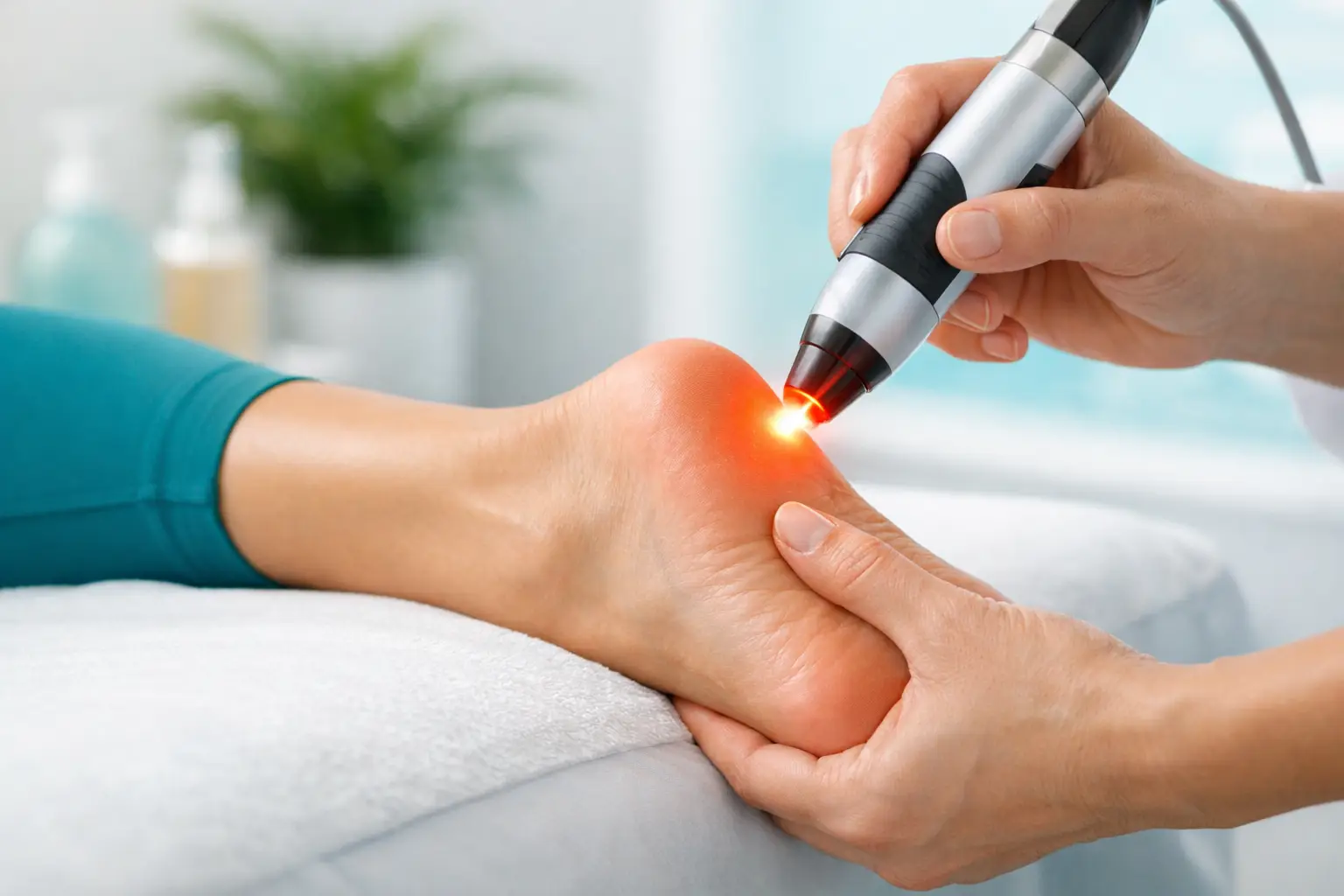
Laser therapy for plantar fasciitis is a non-invasive treatment that uses specific wavelengths of light to target injured or irritated tissue. The goal is to help calm inflammation, support circulation and encourage the body’s natural repair processes.
Most people are looking for one answer when their heel is sore, but treatment is rarely that neat. Laser therapy is not a magic fix, and it is not meant to replace good assessment or rehabilitation. It is best understood as one part of a broader recovery plan, especially when the tissue is irritated, slow to settle, or not responding fully to more basic care.
During treatment, the laser device is applied over the affected area of the foot. Sessions are generally quick, and many people find the treatment comfortable. Some notice improvement early, while others need a series of appointments before the foot starts to feel more settled under load.
Why heel pain can be stubborn
Plantar fasciitis tends to linger because the foot is doing its job all day. Even when you are trying to rest it, you still have to walk, stand, climb stairs and move around at home or work. That repeated loading can keep the tissue irritated, particularly if the original drivers have not been addressed.
For active adults, sport and exercise can add another layer. A sudden jump in running volume, extra field training, poor recovery, worn footwear or tight calves can all contribute. For office workers, long periods of sitting followed by standing and walking can make that classic first-step pain worse. For parents and carers, there is often no real chance to take pressure off the foot for long enough.
This is why a treatment approach focused only on the sore spot may fall short. Short-term relief matters, but so does working out why the plantar fascia has become overloaded in the first place.
How laser therapy may help
The main appeal of laser therapy is that it aims to support tissue healing without adding further stress to the area. When the foot is highly irritable, that can be valuable. Some patients describe a gradual reduction in heel tenderness, less discomfort first thing in the morning, and better tolerance for walking or standing over time.
Laser therapy may be particularly useful when plantar fasciitis has become persistent, when there is ongoing inflammation, or when someone wants a gentle treatment option alongside hands-on care and exercise-based rehab. It can also suit people who prefer a natural, non-invasive approach before considering more aggressive interventions.
That said, results vary. If your heel pain is recent and largely load-related, you may improve quickly with the right footwear advice, calf work and activity changes. If the pain has been present for months, recovery usually takes more patience. The longer the issue has been around, the more important it is to look at the whole chain of contributing factors.
Who might benefit most?
People who often respond well to laser therapy for plantar fasciitis include active adults, runners, court sport athletes, people on their feet all day for work, and anyone dealing with recurring heel pain that keeps interrupting normal life. It can also be helpful for those who feel stuck between wanting to stay active and knowing their foot is not coping.
A personalised assessment matters here. Not every case of heel pain is plantar fasciitis, and not every plantar fascia problem presents the same way. Sometimes the pain is more related to fat pad irritation, nerve involvement, Achilles tension, altered gait mechanics or compensation from another injury. The right treatment depends on getting the diagnosis and the broader picture right first.
What treatment usually involves
A thoughtful treatment plan starts with understanding how your pain behaves. When does it hurt most? What makes it flare up? Has your exercise changed? What shoes are you using most days? How are your calves, ankles and hips moving? These details matter because they shape what recovery needs.
Laser therapy is often combined with other supportive care rather than used alone. Depending on the person, that may include hands-on soft tissue work, myotherapy, remedial massage, dry needling, shockwave therapy, chiropractic support for lower limb mechanics, or guided rehabilitation exercises. In a holistic setting, treatment may also consider stress, sleep and recovery load, because healing rarely happens in isolation from the rest of life.
For some people, the key is reducing irritation quickly so they can return to walking and exercise more comfortably. For others, the focus is rebuilding foot and calf capacity so the problem does not keep coming back. Both matter.
Laser therapy for plantar fasciitis in a holistic care plan
When we look at laser therapy for plantar fasciitis through a holistic lens, the question is not just, will this reduce pain? It is also, what else is this foot trying to tell us?
A flat or overworked arch may be part of the story, but so might calf tightness, glute weakness, running form, poor recovery, or a nervous system that is carrying more stress than usual. If the body is already under strain, tissues often become more reactive and slower to recover. That does not mean the pain is all in your head. It means healing is influenced by more than one factor.
This integrated view can be especially helpful for people with recurring injuries or those who feel they have tried a few isolated treatments without lasting change. A combined plan is often more effective than chasing one therapy after another.
What to expect from results
It is reasonable to want quick relief when every step hurts, but realistic expectations help. Some people notice reduced pain after a few sessions. Others improve more gradually over several weeks, especially if the condition has been present for a long time.
The best results usually come when treatment is paired with sensible changes outside the clinic. That may include modifying training, choosing more supportive footwear, easing back into longer walks, improving calf and foot strength, and allowing enough recovery between higher-load activities.
There can also be trade-offs. If you push too hard too soon because the pain has eased, symptoms may flare again. On the other hand, resting completely for too long can leave the foot less prepared for normal load. The goal is not complete avoidance of movement, but the right amount of movement at the right stage.
When to seek support
If heel pain has been hanging around for more than a couple of weeks, keeps returning, or is changing the way you walk, it is worth getting assessed. Early support can make recovery simpler. It also helps rule out other causes of foot pain and gives you a clearer plan instead of trial and error.
At Neurohealth Wellness, care is built around the person, not just the painful spot. That means looking at how your body is moving, what may be driving the irritation, and which combination of therapies is most likely to support real recovery. For some people, laser therapy is a strong fit. For others, another approach may be more suitable, or the best outcomes may come from combining methods.
Heel pain can shrink your world in quiet ways. You stop walking for exercise, avoid weekend sport, stand differently at work, or feel reluctant to commit to plans that involve being on your feet. The good news is that with the right care, plantar fasciitis usually does improve. A personalised approach gives your foot the best chance to settle, heal and handle life again with more comfort and confidence.


