


Many people wake up with a numb, heavy “dead arm” and assume they simply slept in the wrong position. But when tingling, weakness, or shooting pain keeps returning—especially from the neck into the shoulder, arm, or fingers—it may be a sign that your nerves are being compressed. At Neurohealth Wellness on Sydney’s Northern Beaches, we commonly see this pattern linked to poor posture, tight neck muscles, shallow breathing, and a condition called Thoracic Outlet Syndrome (TOS). The good news? The problem is often not the arm itself, but the way the neck, shoulders, ribs, and nervous system are functioning together.
Read Article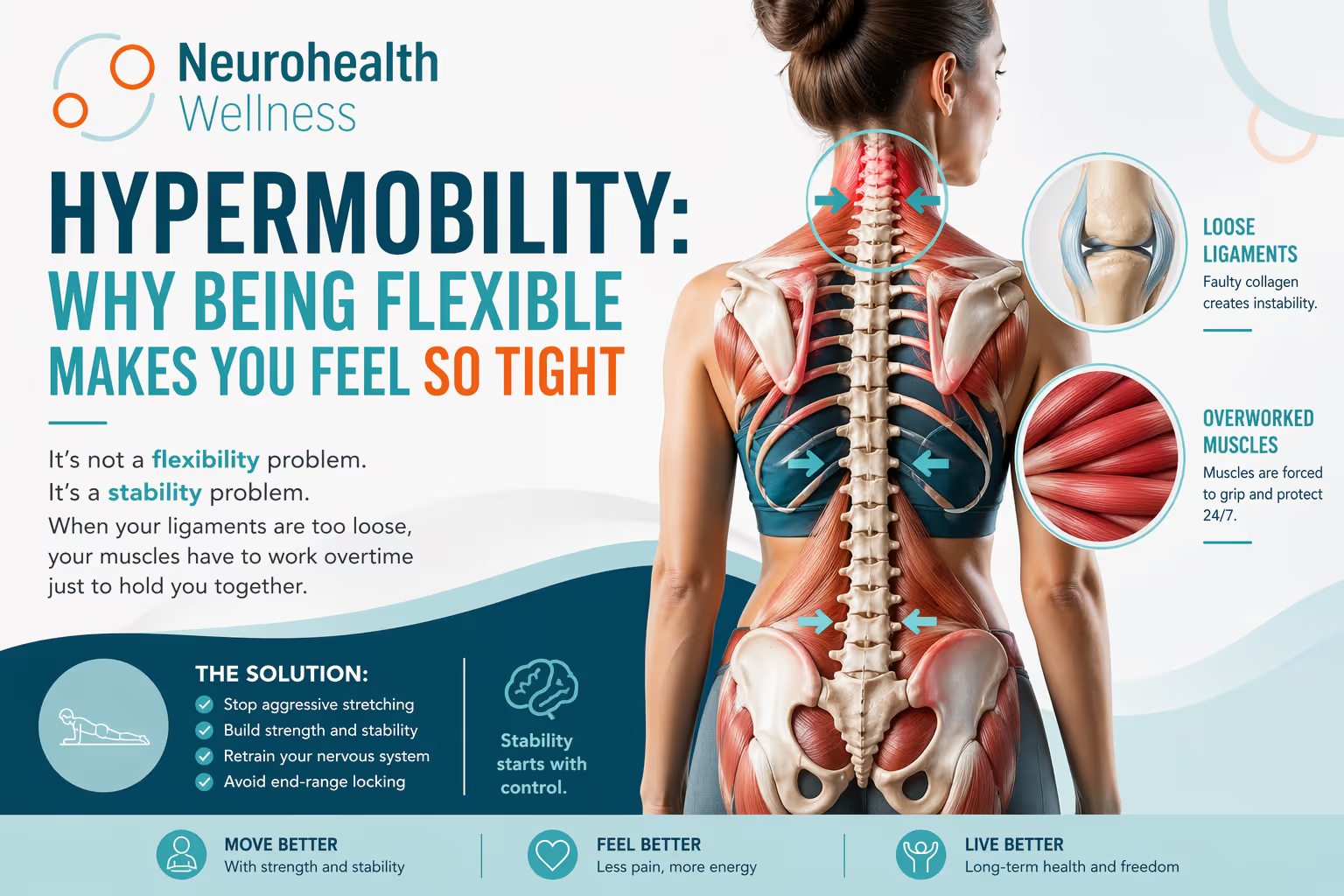
You’ve always been the flexible one—the person who can stretch further, bend deeper, and move with ease. But beneath that flexibility, there’s a frustrating reality: constant tightness, aching muscles, and a body that never truly relaxes. If this sounds familiar, you’re not alone. At Neurohealth Wellness on Sydney’s Northern Beaches, we see this pattern every day. The truth is, your tightness isn’t a flexibility problem—it’s your body’s way of creating stability in a system that lacks it. Understanding this is the first step to finally breaking the cycle and feeling comfortable in your body again.
Read Article
Waking up with numb fingers, tingling hands, or a “dead” arm can be unsettling—especially when it keeps coming back. Most people assume it’s carpal tunnel syndrome and focus on the wrist, but what if the real issue is coming from somewhere else entirely? At Neurohealth Wellness, we often find these symptoms are linked to compression of the nerves higher up in the neck and chest, not the hand itself. In this blog, we’ll break down why your posture, spine, and nervous system play a crucial role in hand symptoms—and what you can do to fix the root cause, not just the symptoms.
Read Article
Chronic pain, fatigue, brain fog, poor recovery and recurring flare-ups rarely come down to one isolated problem. The Born Free “Learn” page presents a hypothetical multi-system disease model that links immune dysfunction, microbial biofilms, metabolic disruption, nervous system dysregulation, mineral depletion and chronic inflammation into one self-perpetuating cycle. Importantly, the site describes this as a preview of an upcoming paper, with draft figures that may contain errors, and its protocol section states the material is for research and educational purposes only rather than established medical guidance.
Read Article
Lateral elbow pain is often quickly labelled as “tennis elbow”… but what if that diagnosis is wrong? For many people, especially those who have tried rest, injections, or rehab without success, the real issue may lie deeper within the joint, nervous system, or surrounding structures. New research highlights that a significant number of persistent cases are misdiagnosed, meaning the true cause is never addressed. In this article, we unpack why tennis elbow isn’t always what it seems, the key red flags to watch for, and how a thorough, whole-body assessment can help uncover the real source of your pain.
Read Article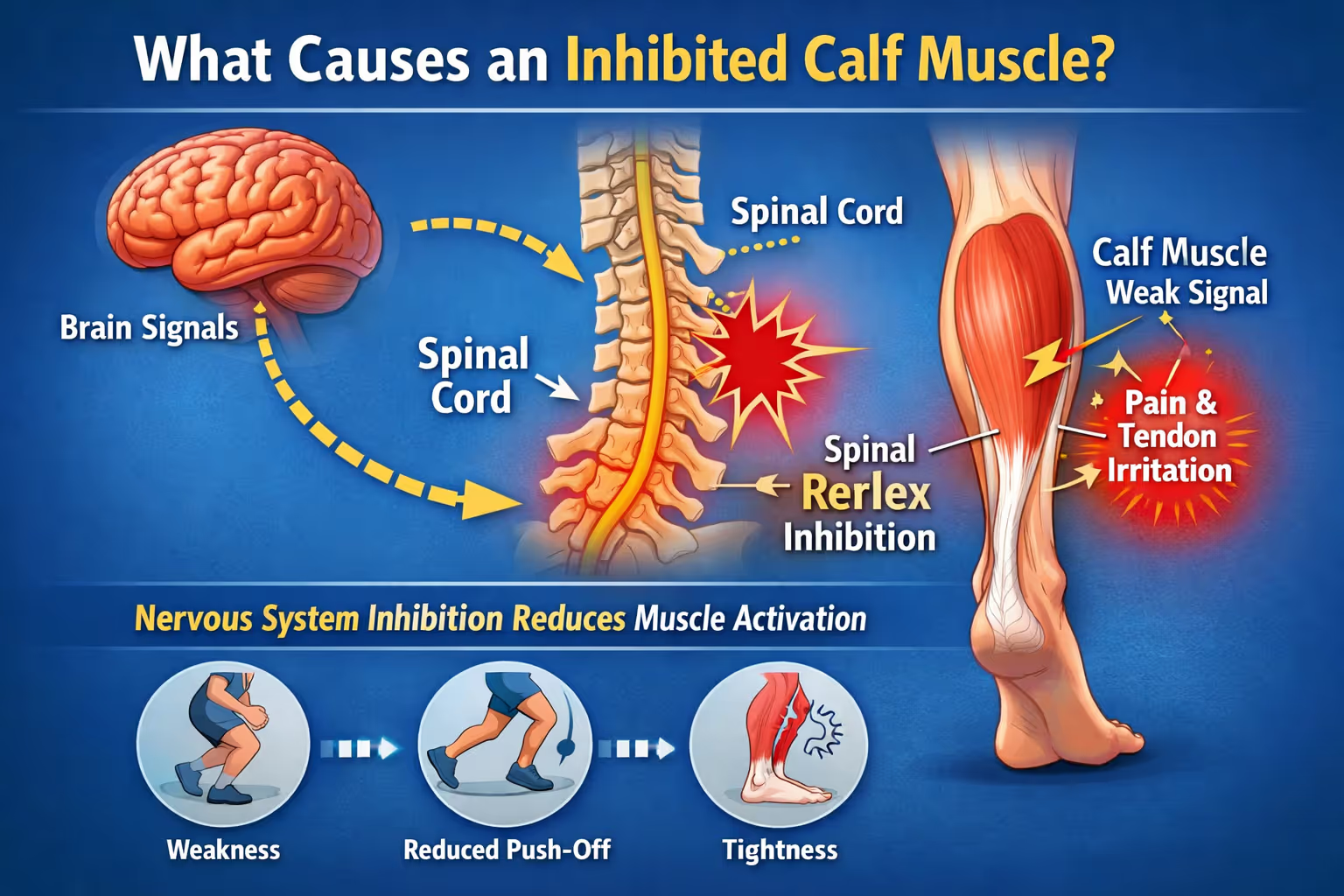
Most people are surprised when they hear their calf muscle is “inhibited.” It sounds like a structural problem — something weak, torn, or not working properly. But in many cases, the muscle itself isn’t the issue. Instead, it’s the nervous system turning the signal down as a protective response. Whether it’s Achilles pain, tight calves, or reduced push-off strength, understanding what “inhibition” really means can completely change how you approach recovery. In this article, we break it down in simple terms so you can understand what’s happening in your body — and more importantly, what you can do about it.
Read Article
our foot is one of the most complex structures in the body — made up of 33 joints designed to move, adapt and absorb force with every step you take. Yet modern life often treats the foot like a rigid block, restricting its natural function through stiff footwear and excessive support. Over time, this can weaken the foundation of your body and contribute to pain in the feet, knees, hips and lower back. At Neurohealth Wellness on Sydney’s Northern Beaches, we take a different approach — restoring movement, strength and function from the ground up.
Read Article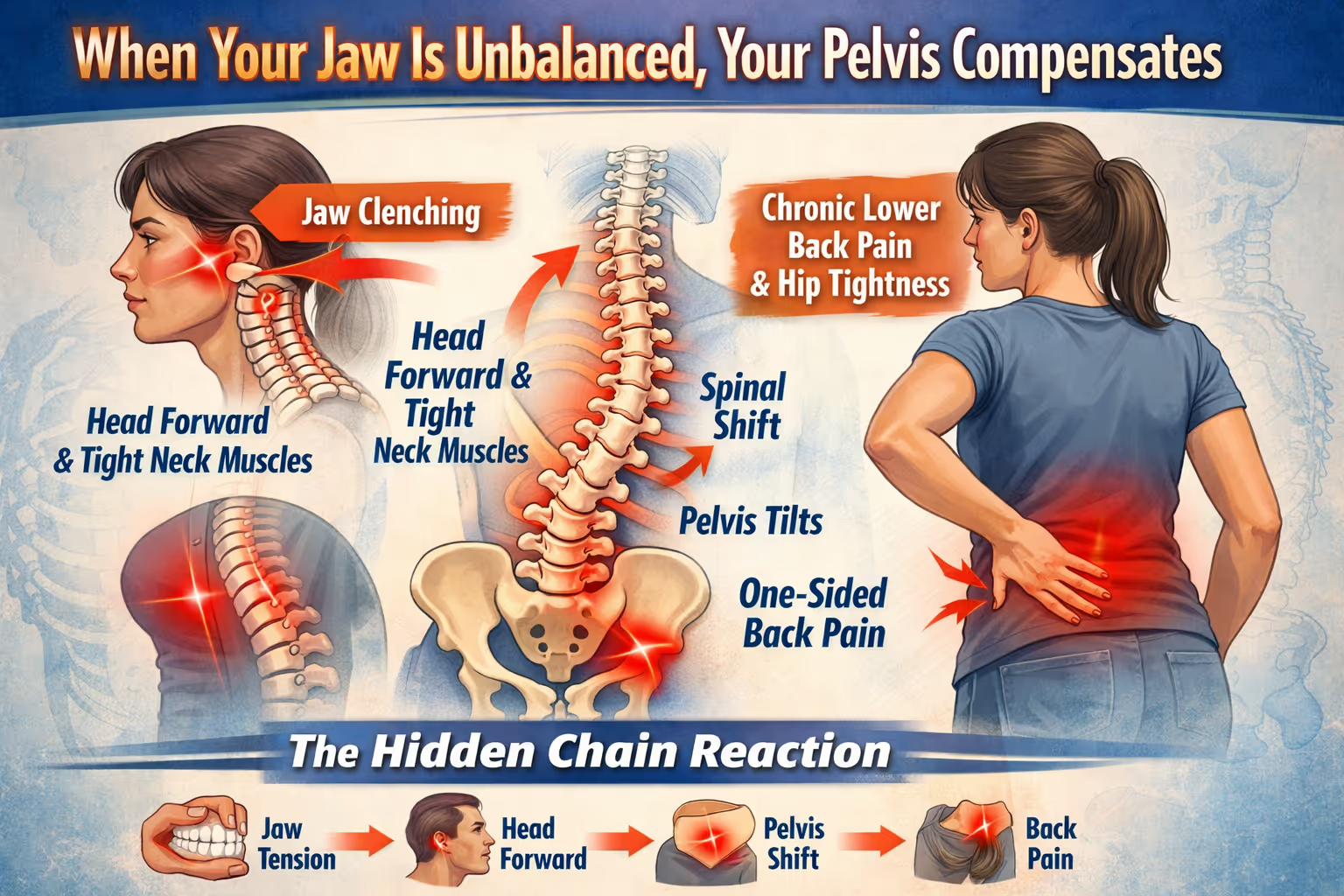
You stretch your hips. You strengthen your core. You foam roll your glutes. Yet the same one-sided lower back pain keeps returning. For many people, the real driver of these recurring issues isn’t the pelvis or lower back at all — it’s the jaw. Chronic jaw clenching or tension can shift your head forward, tighten the muscles of the neck, and trigger a cascade of compensations through the spine all the way down to the pelvis. At Neurohealth Wellness on Sydney’s Northern Beaches, we often see this hidden connection in patients dealing with persistent hip tightness, SI joint irritation, or unexplained back pain. Understanding how the jaw, spine and pelvis work together can reveal why some problems keep coming back — and what it takes to finally break the cycle.
Read Article
For decades we were told that fat was dangerous, the sun was harmful, salt would damage our heart, and red meat would shorten our lives. We were encouraged to swap real foods for low-fat alternatives, start the day with cereal, and rely on medications to control cholesterol and blood pressure. Yet despite following this advice, chronic disease has exploded. Since the late 1970s, obesity rates have tripled, metabolic disorders have surged, and fatigue, inflammation and chronic pain have become increasingly common. This raises an important question: what if many of the health messages we trusted were incomplete, misunderstood, or distracted us from the real drivers of disease? In this article, we explore seven common health myths that have shaped modern health advice — and what your body actually needs to build resilience, reduce inflammation and stay healthy for the long term.
Read Article
If you’ve ever experienced sudden dizziness or a spinning sensation when standing up, turning your head, or rolling over in bed, you’re not alone. Vertigo and balance issues are unsettling and often misunderstood, with dehydration and electrolytes frequently blamed as the cause. While hydration does play a role in nervous system and balance function, electrolytes are not a cure-all for vertigo. Understanding when hydration helps — and when deeper nervous system or inner-ear factors are involved — is key to addressing the root cause of ongoing symptoms.
Read Article
If you’re exercising, staying active, and even getting regular chiropractic care — yet pain, stiffness, or inflammation keeps returning — there may be a missing piece. Your body cannot heal effectively in a chronically inflamed environment. This is one of the key reasons the traditional food pyramid was quietly abandoned. Modern nutrition science now recognises that what you eat directly influences inflammation, recovery, and how resilient your body truly is.
Read Article
Pregnancy is an incredible journey — but for many women, it also comes with persistent discomfort. Lower back pain, hip tension, swelling, poor sleep, and rising stress are common as the body adapts to rapid physical and hormonal changes. At Neurohealth Wellness, we see how these challenges can impact daily movement, energy, and emotional wellbeing. Pregnancy-safe remedial massage offers a gentle, targeted way to ease tension, support the nervous system, and help you feel more comfortable throughout every stage of pregnancy.
Read Article

